AutoSuccess Story: Morehead Honda

Equitable Deals from Equity Data

Morehead Honda Finds New Ways to Drive Sales
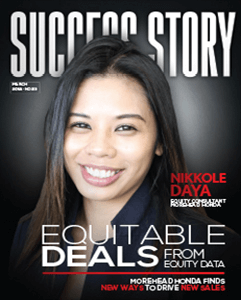
Morehead Honda Success StoryFounded one year after World War II, Morehead Honda is steeped in tradition. The family-owned dealership, located in Newburgh, New York, has served generations of drivers in the Newburgh, Poughkeepsie and Monroe area. Through the years, the dealership has seen many changes in the auto sales industry — both in automotive technology and in the way consumers shop for vehicles.

To stay relevant and meet the needs, desires and demands of the modern automotive customer, Morehead has had to develop new ways to provide sales and service opportunities to its customers, including creating a position that would have been unheard of just a few years ago: an equity consultant.

Nikkole Daya started with the company in 2013 in the BDC department. As her skills grew and the dealership started seeing the potential of selling cars from the service lane, her transition to the newly formed equity consultant position was a natural step.

“When I was hired at Morehead Honda, I had no experience in the car business,” Daya said. “I started as a BDC agent and thought it was going to be a simple telemarketing job. But then I ended up doing a lot of business development and lead generation.” When the BDC department was reorganized, the dealership’s leaders chose Daya to head a new initiative — one they hoped would help the dealership grow in the future. “They made this position for me, which involved data mining and using equity tools. At first, though, no one had any idea how to use the tools. It was just me attending Webinars and trying to see what would work.” From these unsteady beginnings, however, Daya started to build a presence.

“We turned out to have great success with it,” she said. “We’ve made a lot of money.”

TURNING EQUITY INTO SALES

“As an equity consultant, what I do is data mining,” Daya said. “I reach out to customers. Some of which are people in our service drive and appear to be in good equity position to roll over into a newer car. In other cases, I’ll do a lot of cold calling just to see if they’d be open to an appraisal. My approach is that we can either try to buy their vehicle outright from them if it fills our inventory need or roll their existing equity over into something newer or different for them.”

This approach is new for a lot of Morehead’s customers, and Daya has found a lot of success by just informing potential sales customers of their options. “A lot of times, when people are not really educated about the car business, they find out they can get a really good deal,” she said.

While selling to consumers who aren’t even in the market for a new vehicle is great for the dealership’s profitability, Daya maintains her focus on making sure the customer is getting the best deal they can and is satisfied with the process. “It’s nice to see how it works,” she said, “to see what people would be open to. I get so much gratification when people realize they can upgrade to a nicer vehicle when they weren’t even thinking about it in the first place. It’s a great sense of accomplishment.”
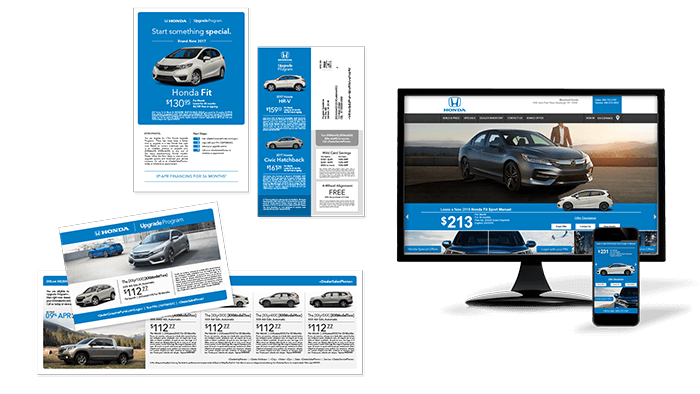
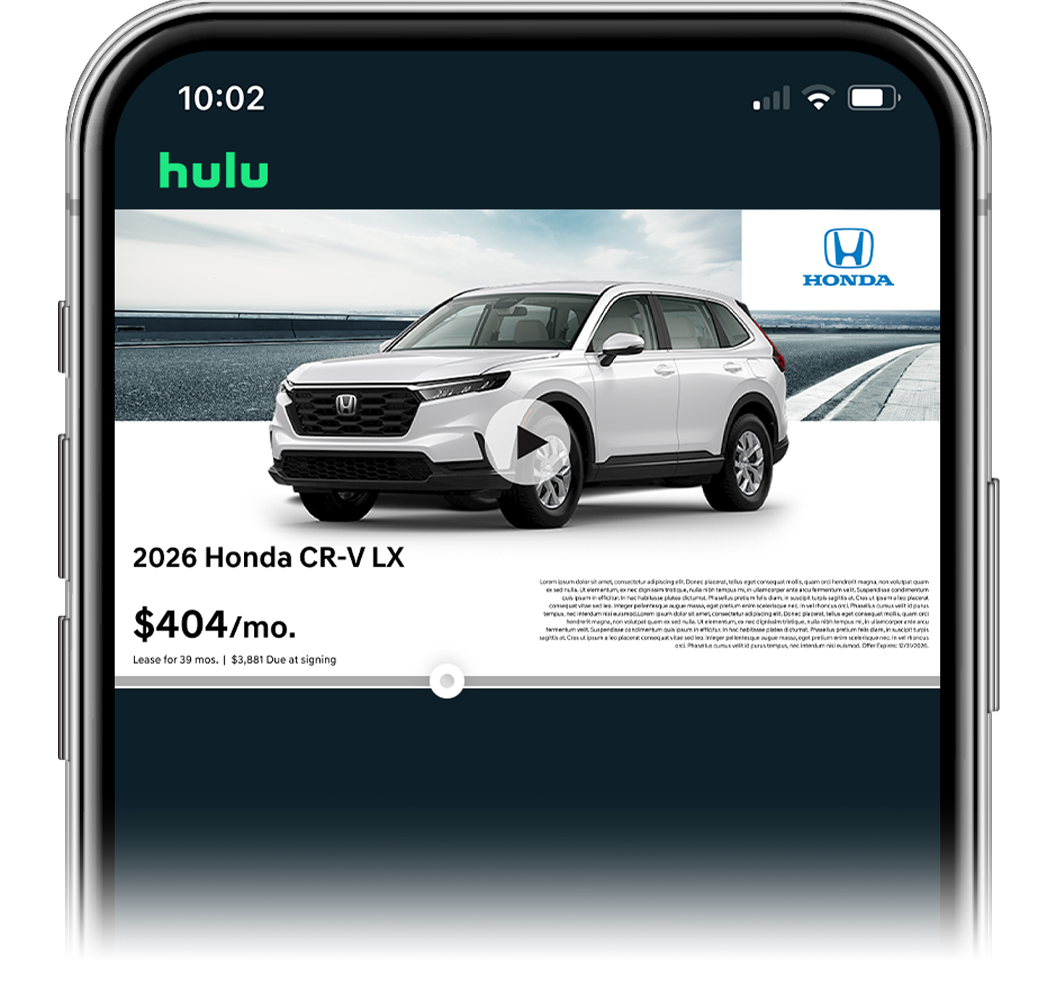
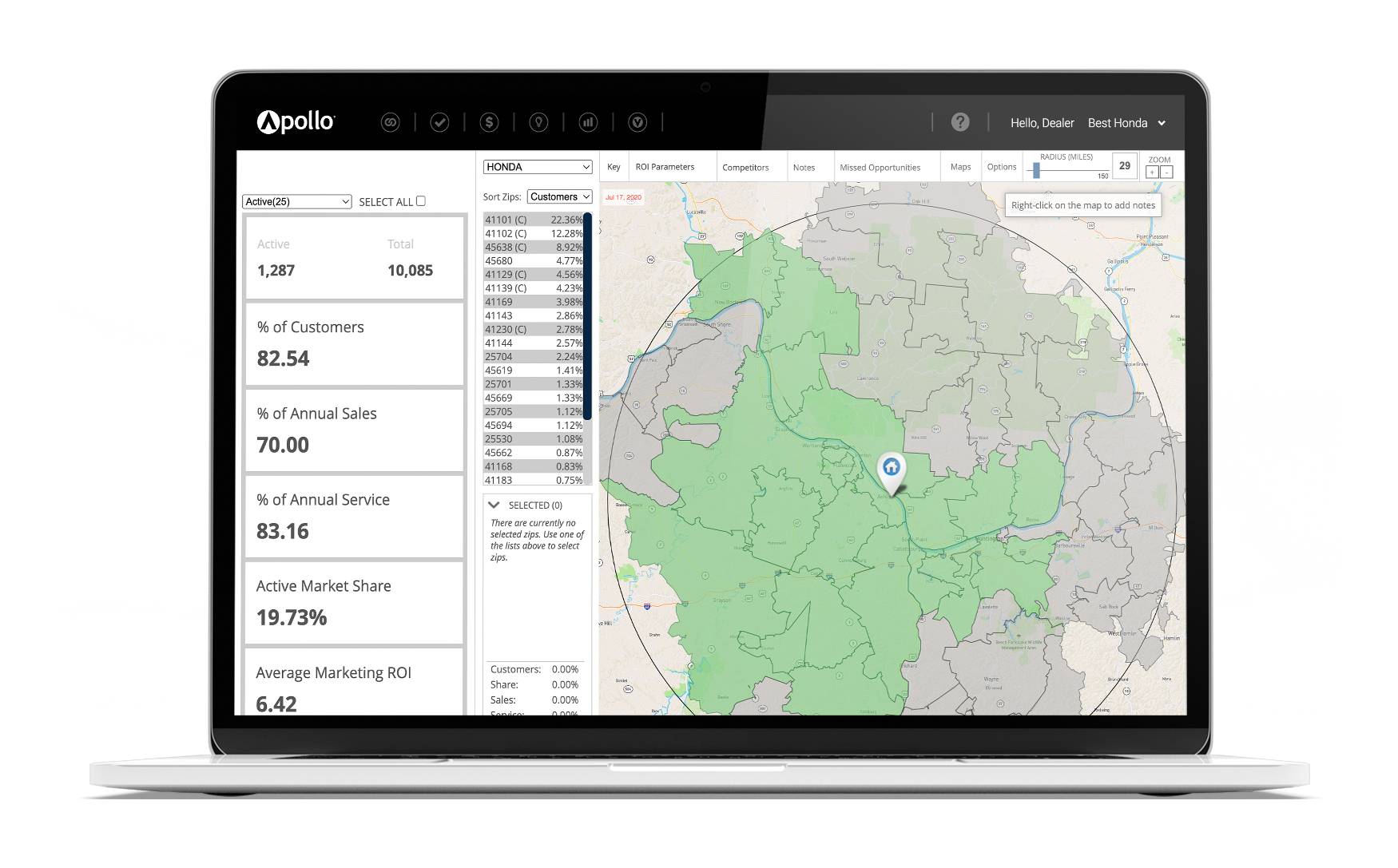
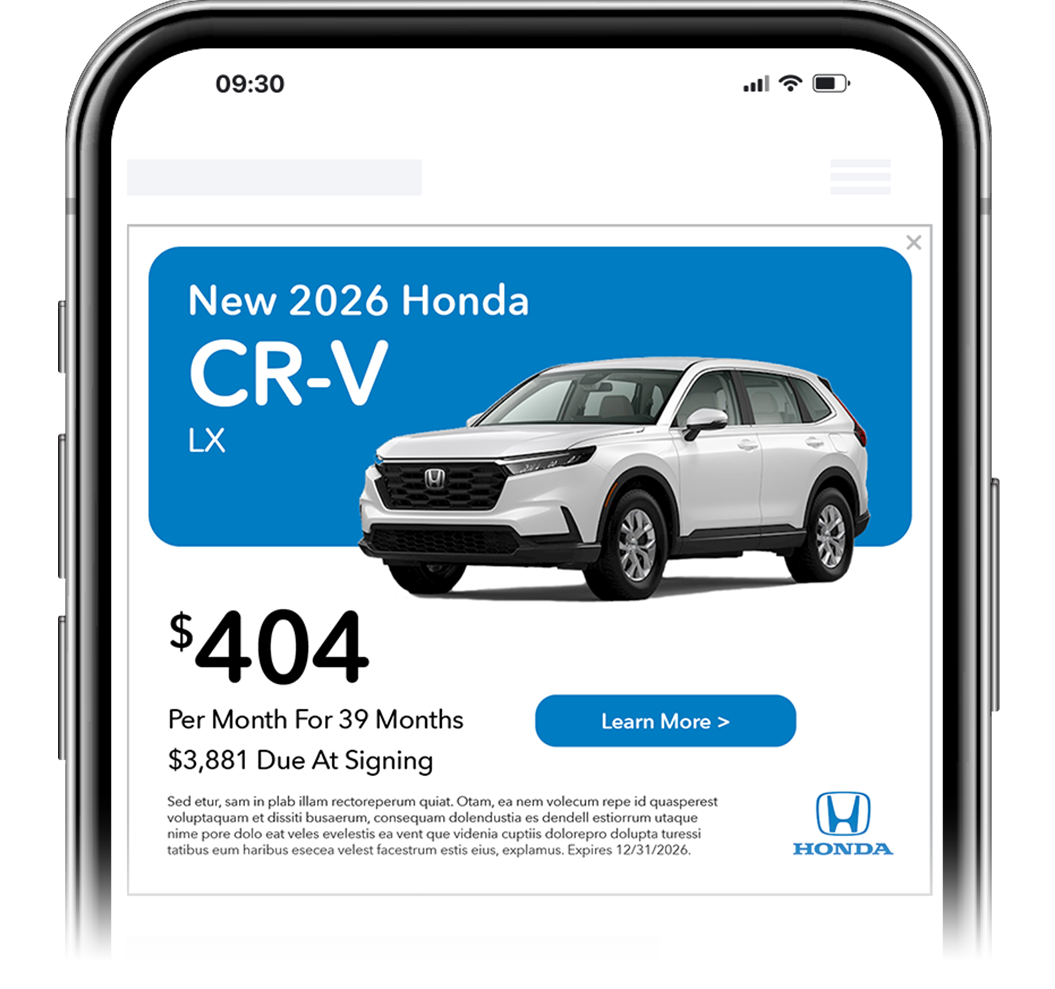
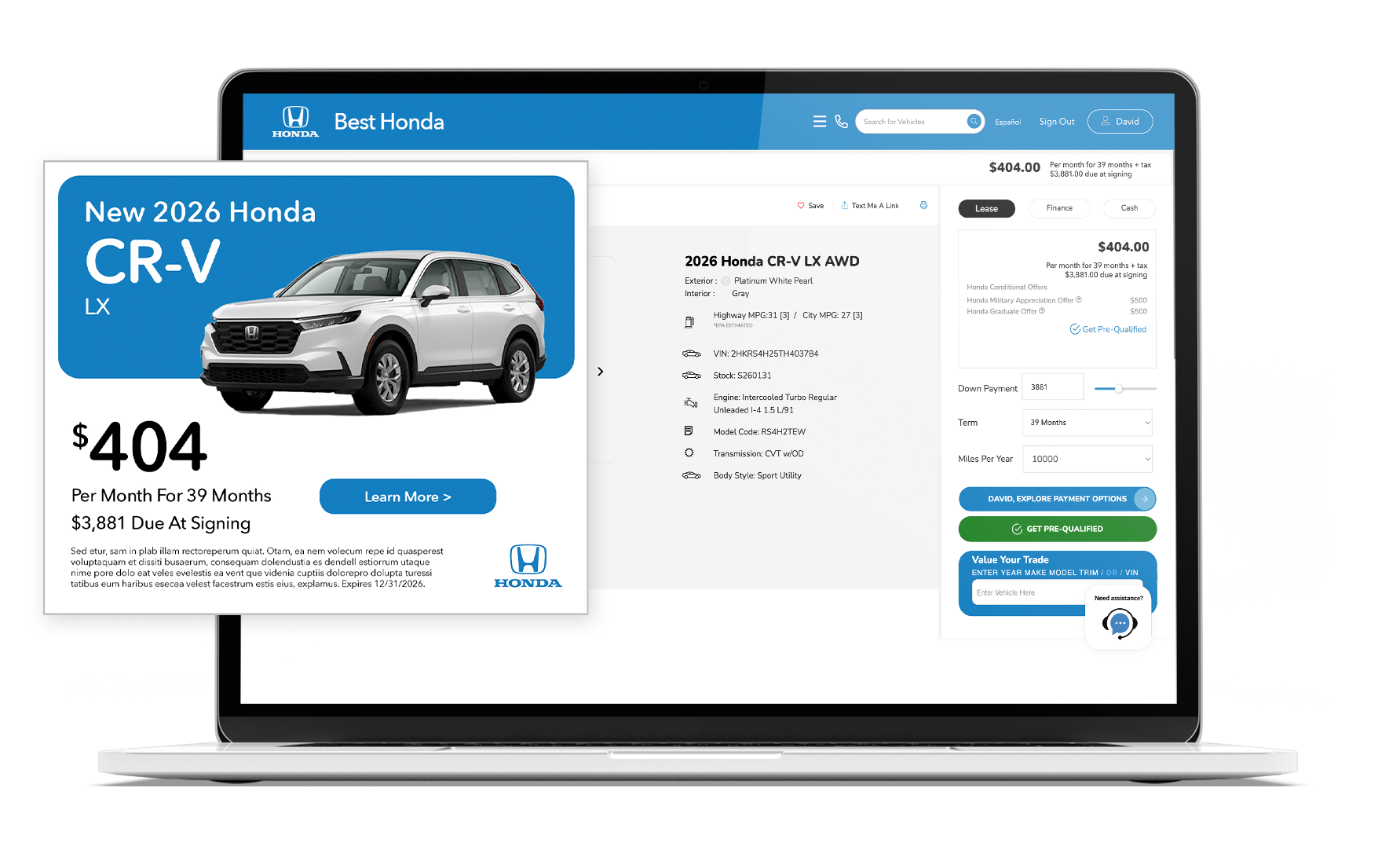
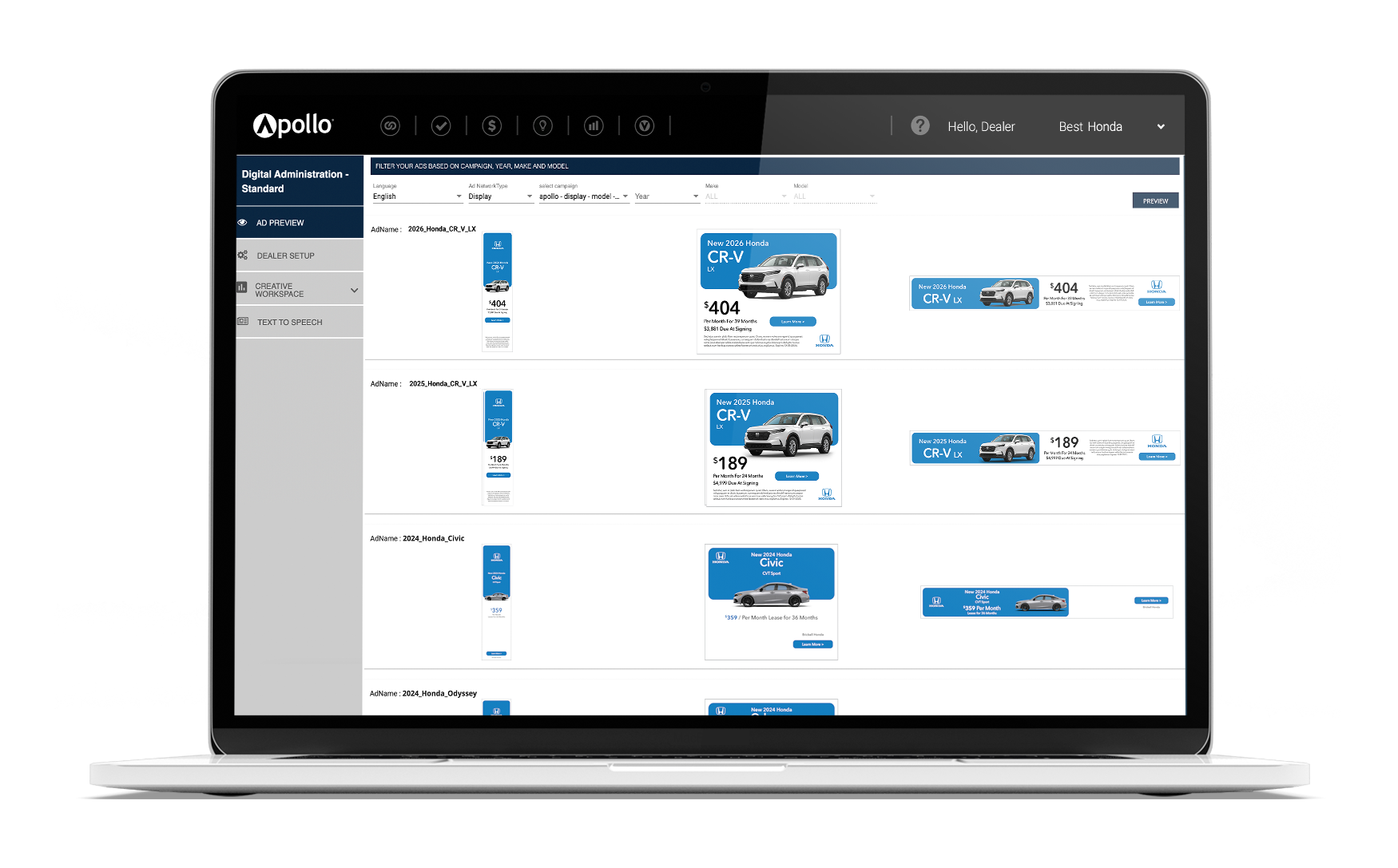
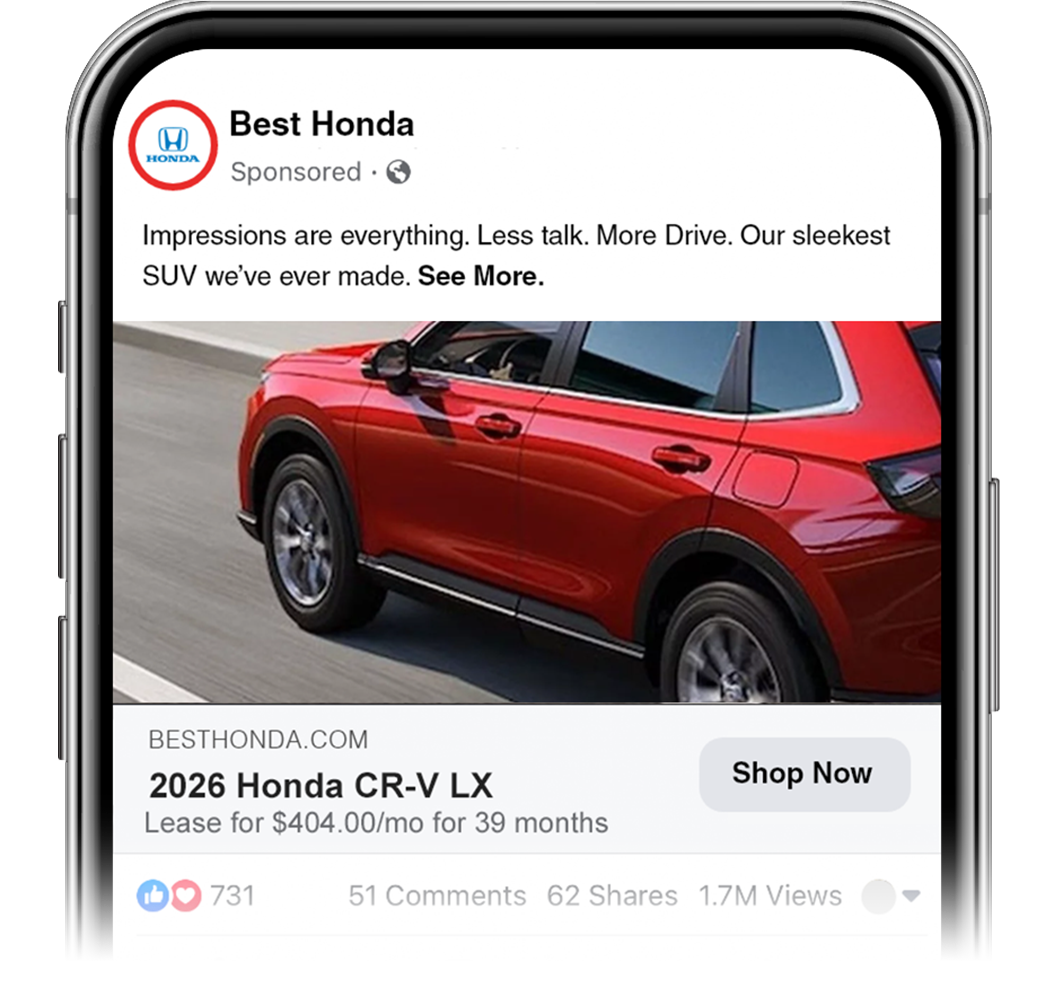
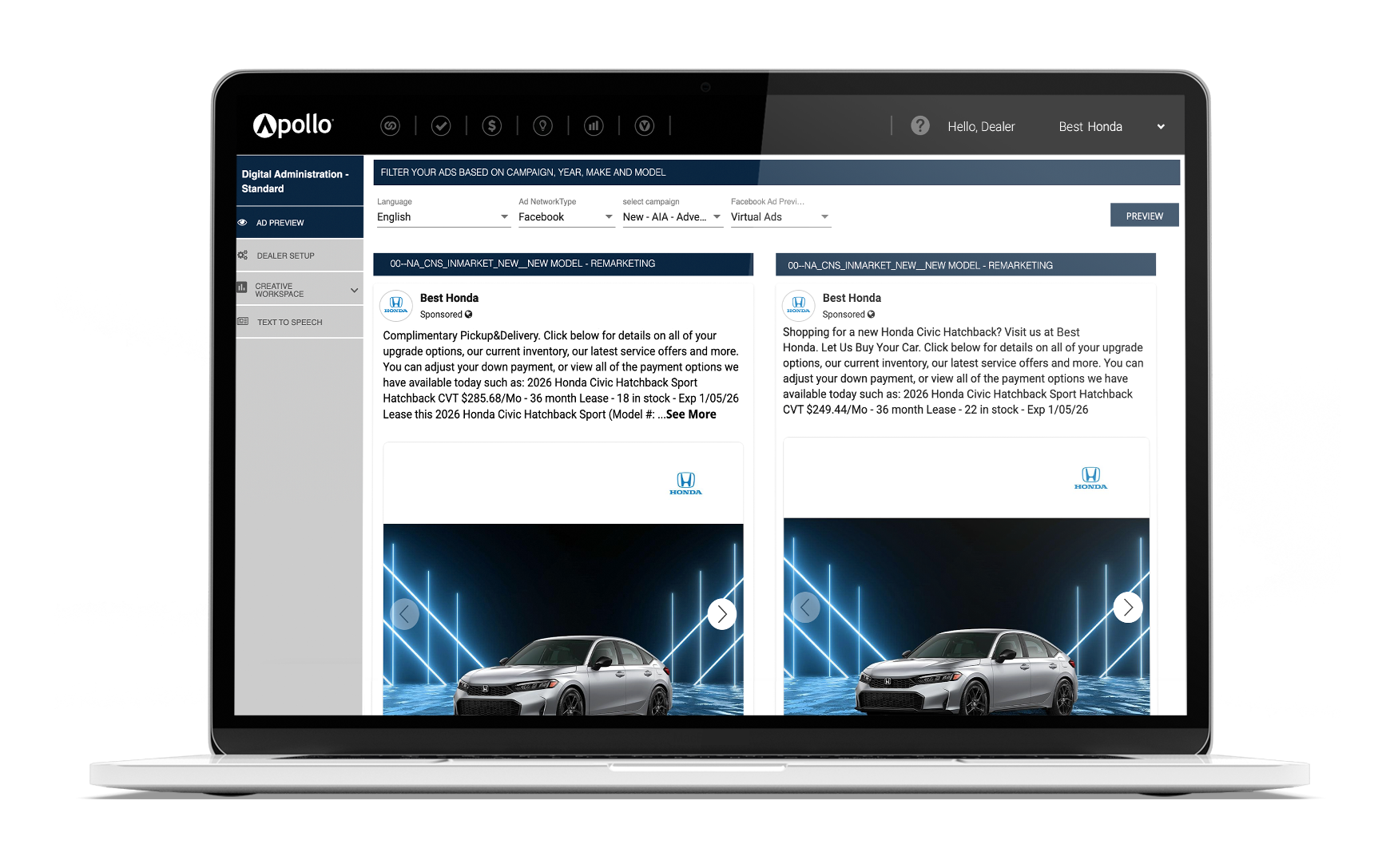
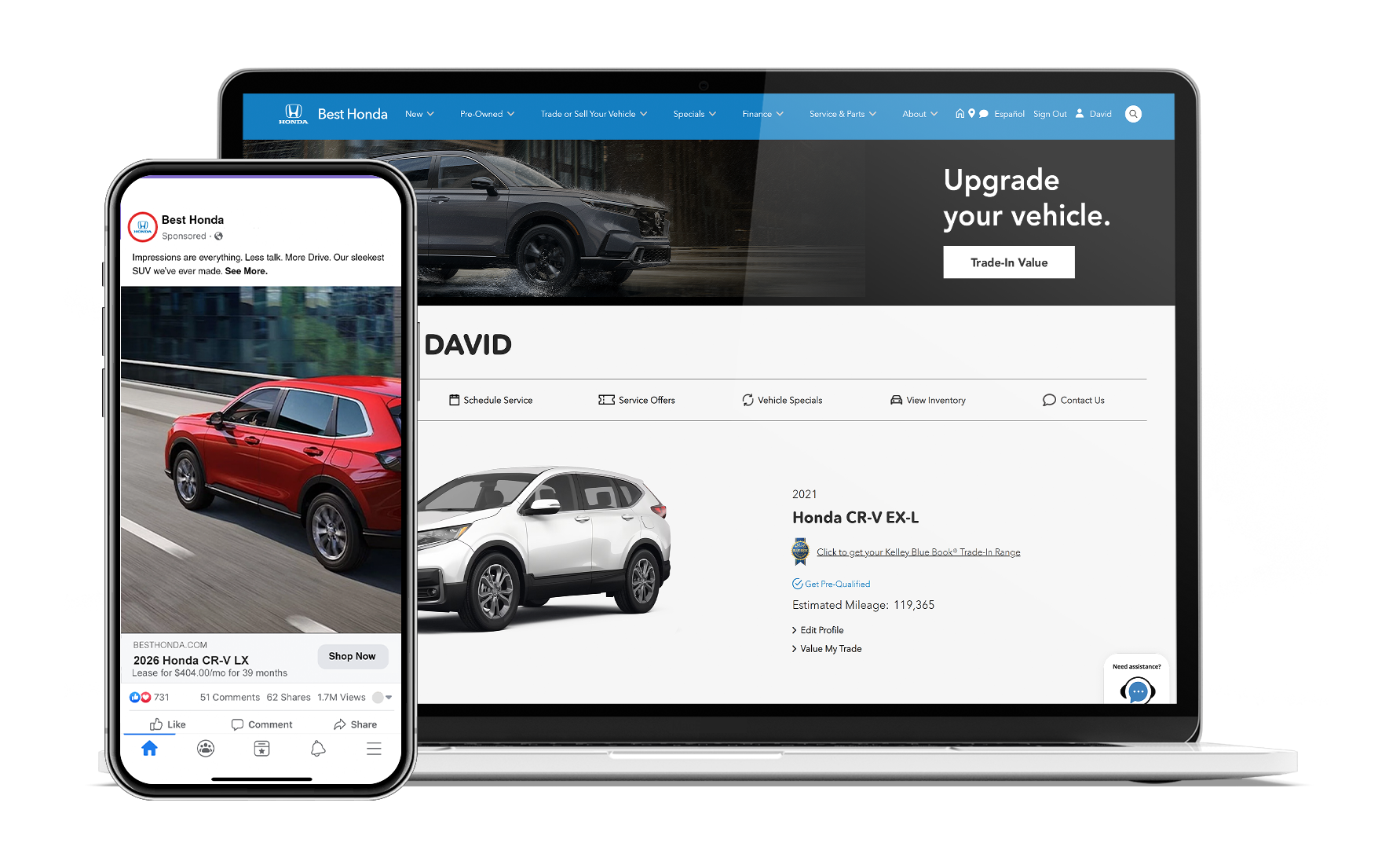
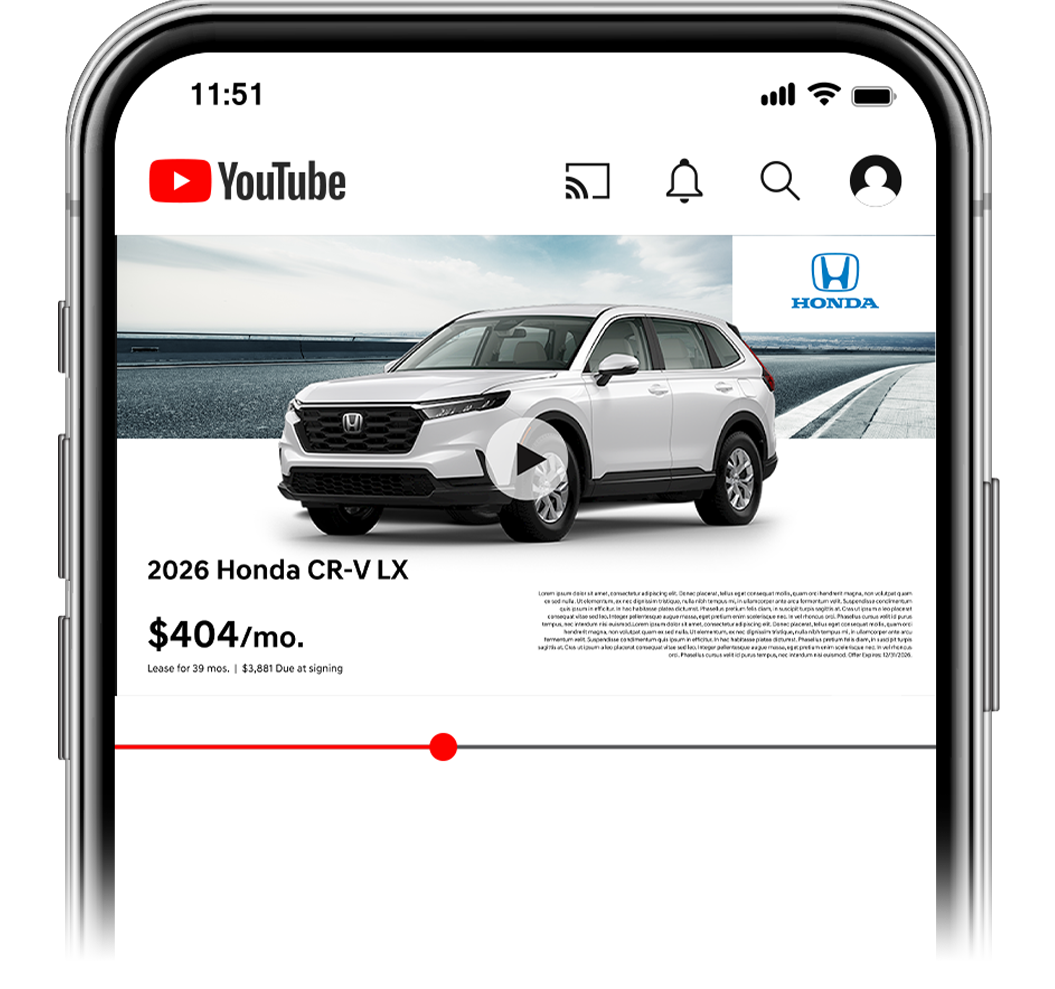
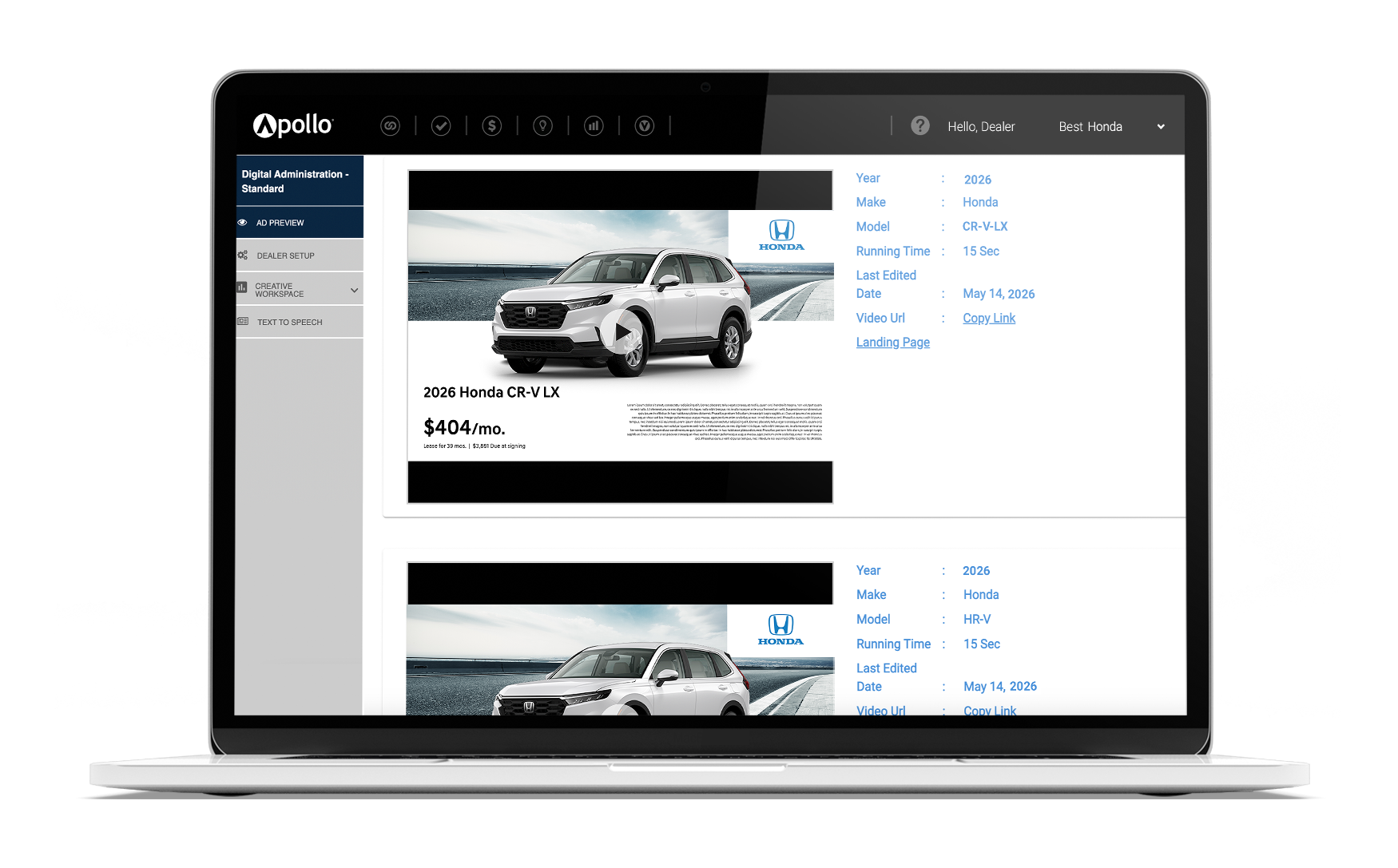
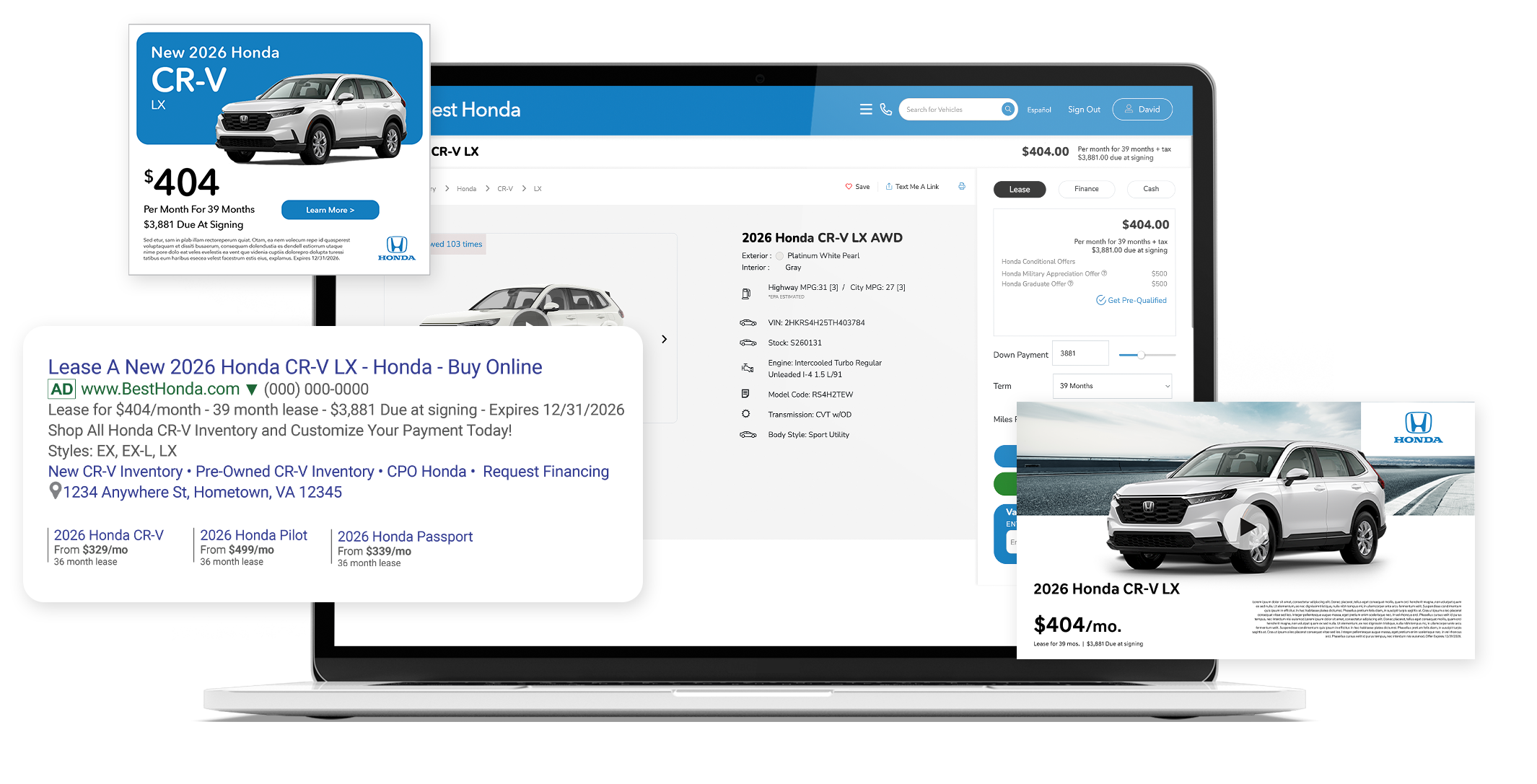
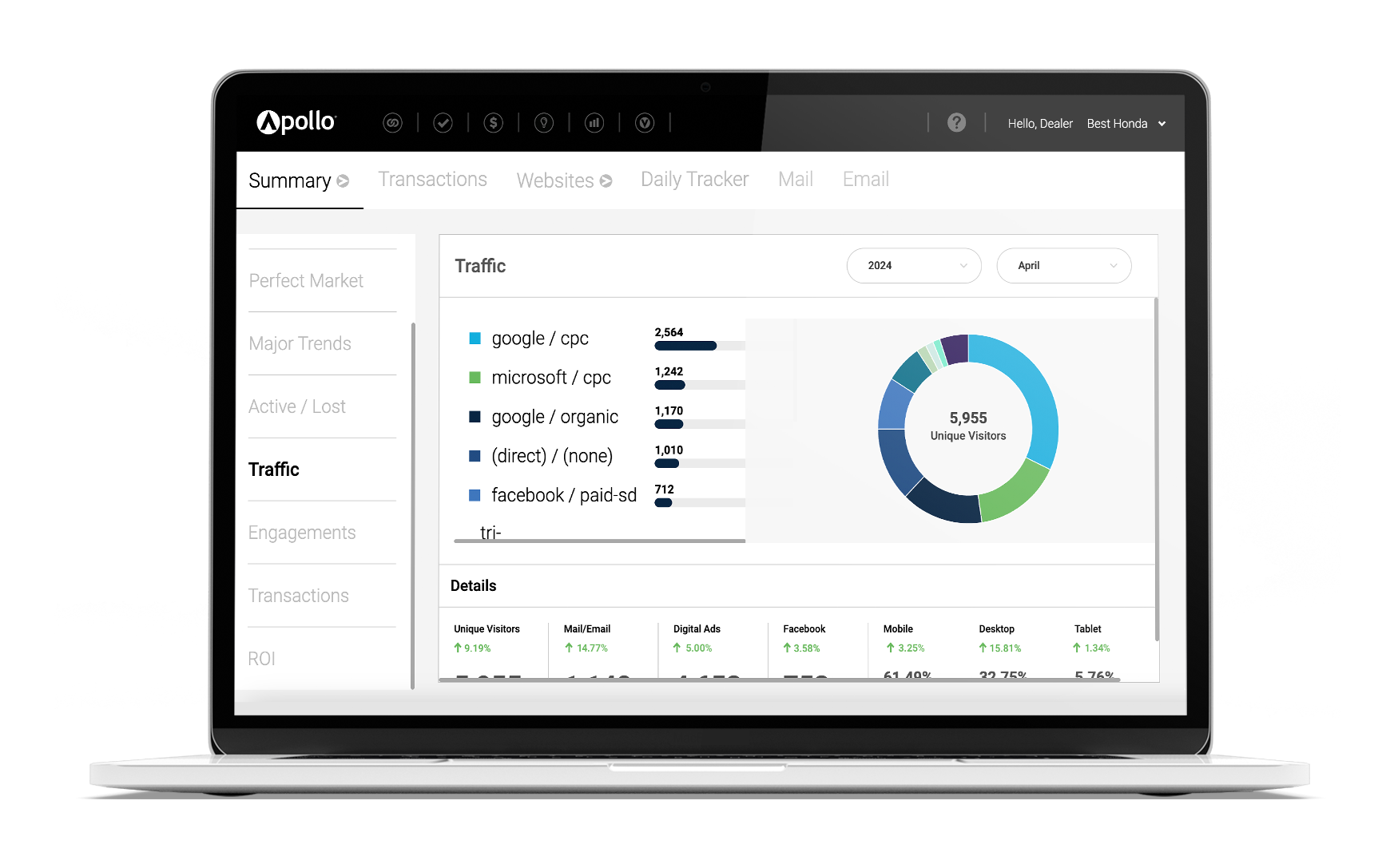
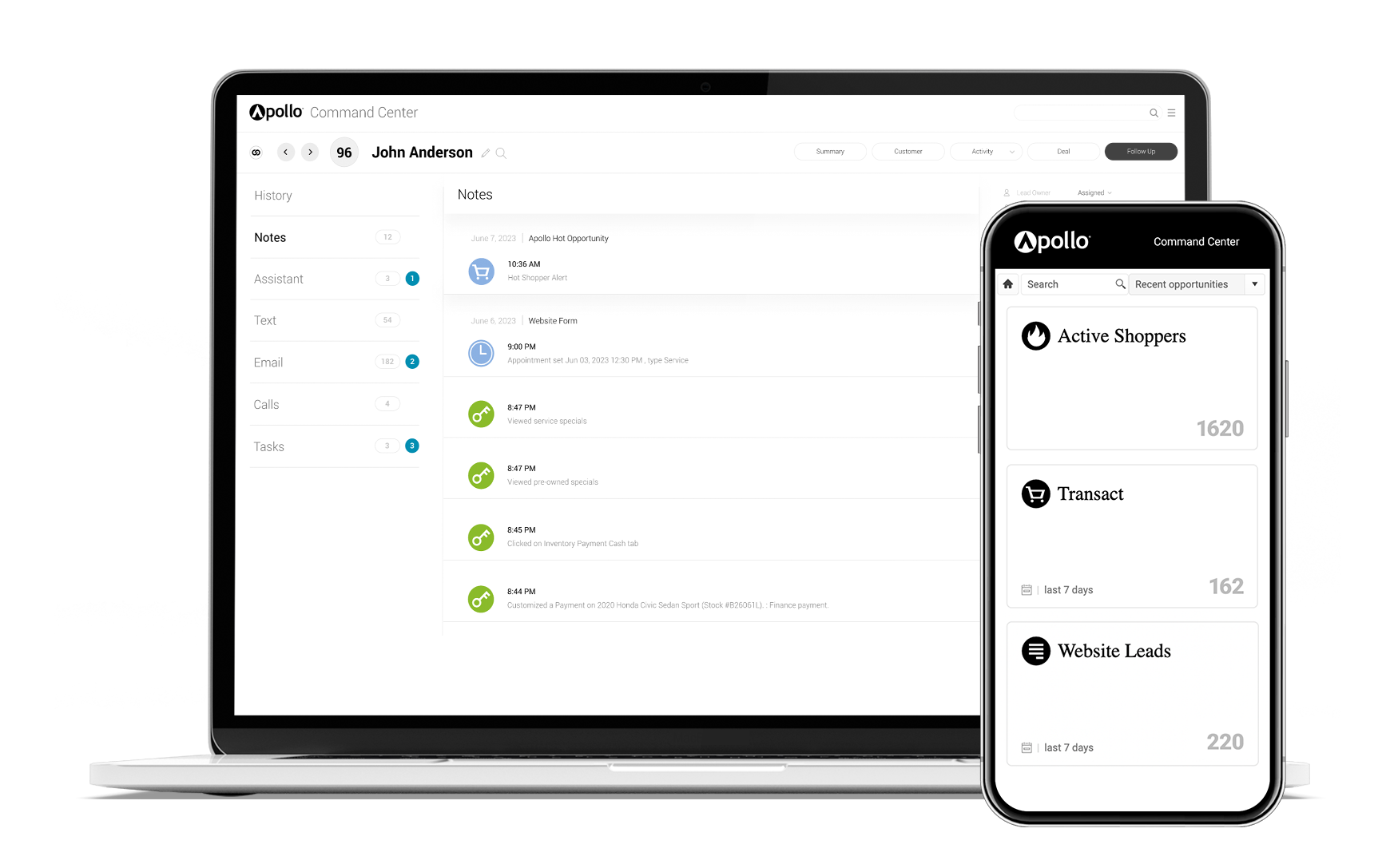
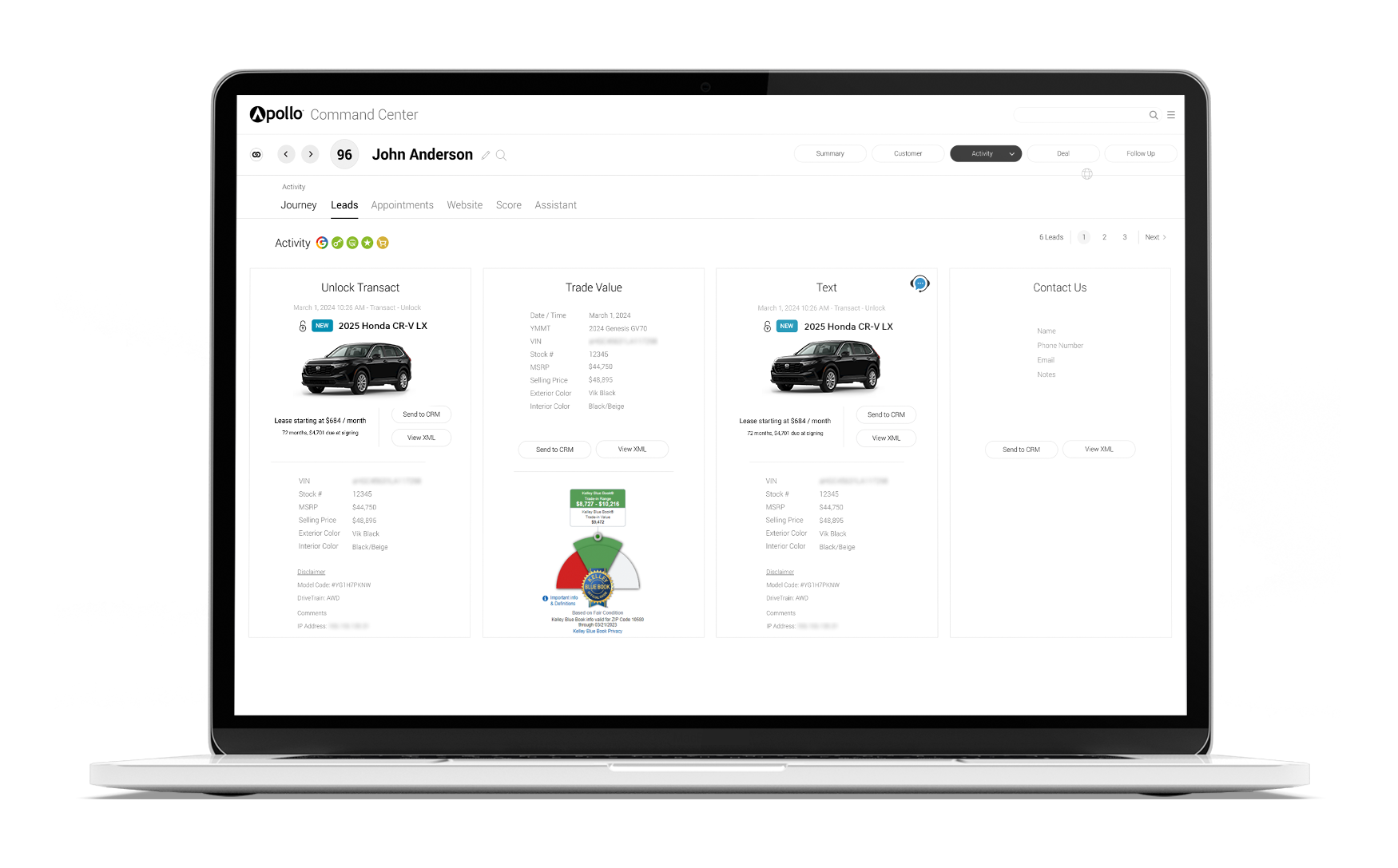
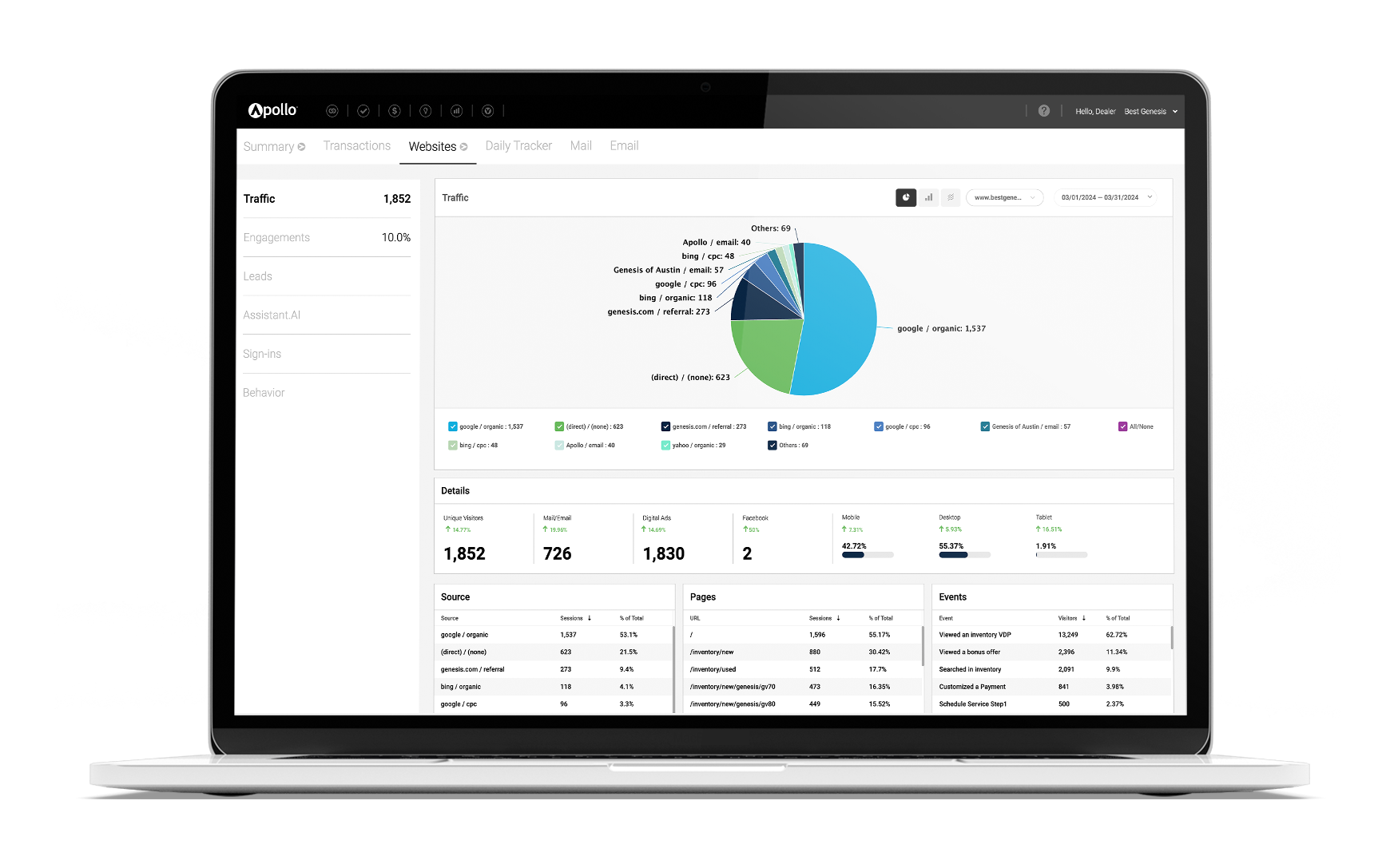
Morehead Honda uses Team Velocity Marketing’s Apollo Technology Platform to manage integrated marketing campaigns for sales, service and equity mining. Apollo automatically generates and deploys campaigns across mail, email and digital advertising, offering consistent messaging and branding, and provides a web-based dashboard to track results in real-time.

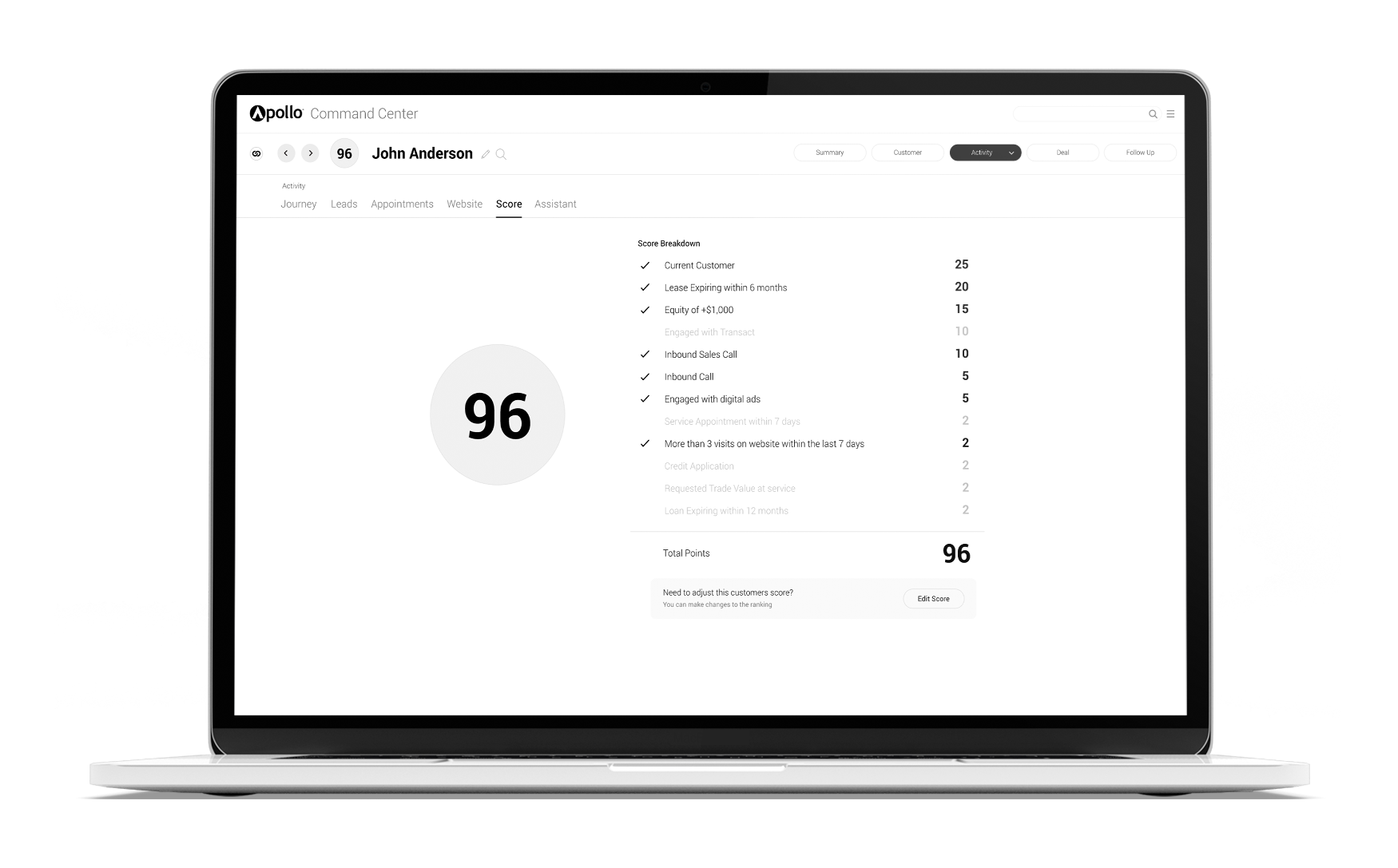
To assist her in these efforts, Morehead Honda has used several technology tools to find customers who might be receptive to a sales presentation. They recently put into place Team Velocity’s Apollo platform, which allows Daya to identify prospects who could be in the market for a vehicle based on their equity position. It also allows the dealership to generate dynamic marketing campaigns in multiple channels and track their progress and efficiency.

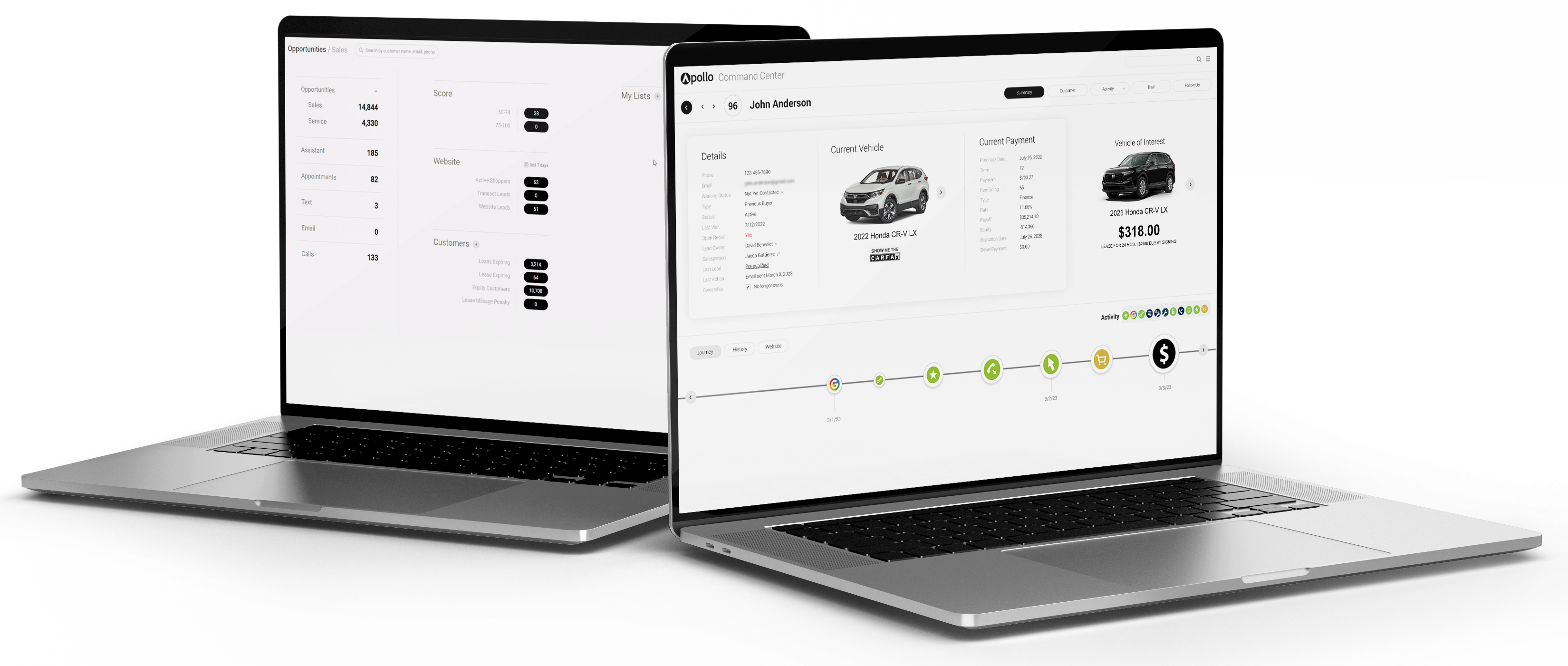
“Apollo has been a great tool for me because it helps me filter customers who might be interested in getting into a new vehicle out from the rest,” Daya said. “It also allows me to view their recent vehicle information and identify their equity position before I contact them.” With the help of Team Velocity, 30% of sales with a 49:1 ROI have been attributed to Apollo.

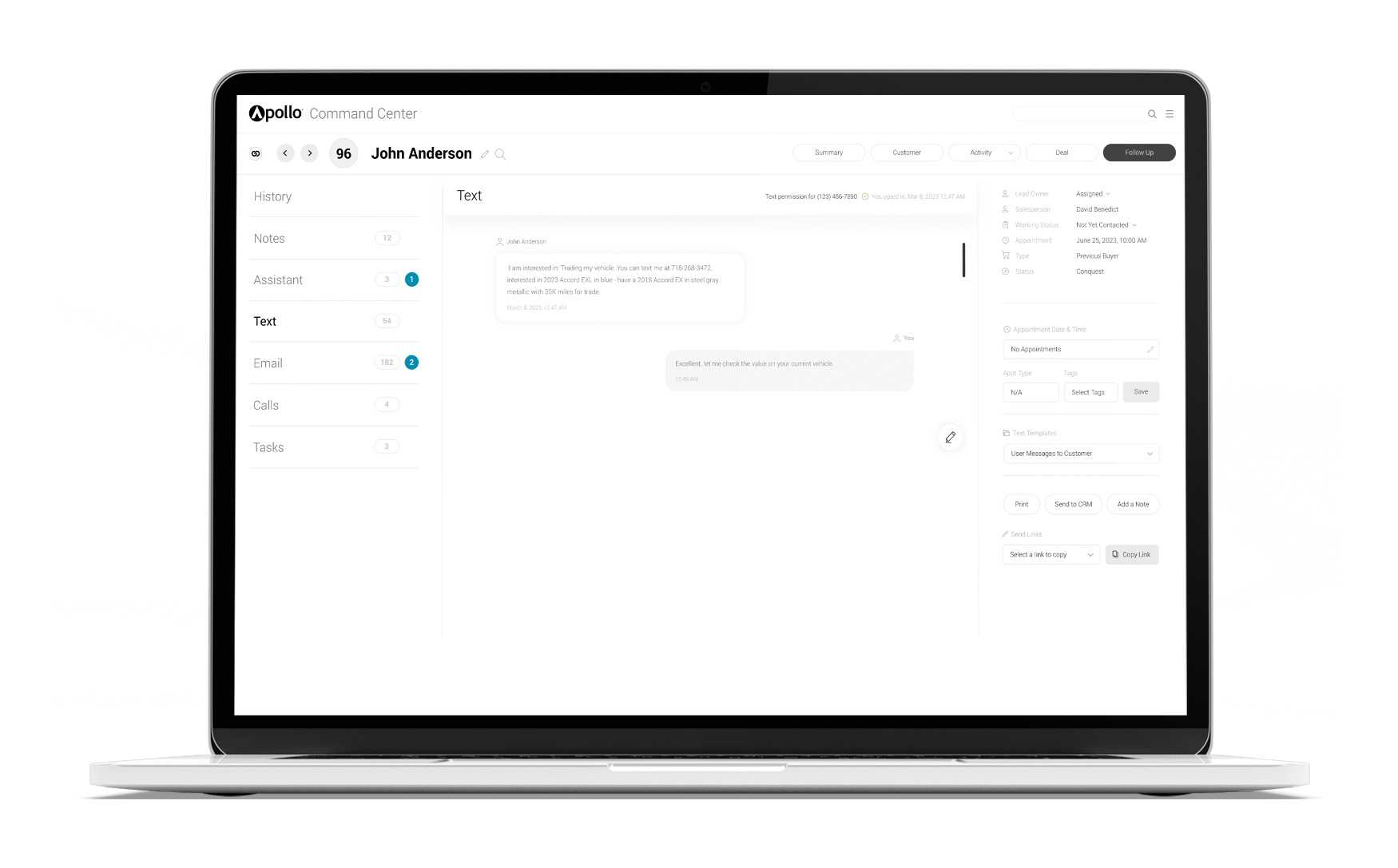
This technology allows Daya to be proactive in her presentations. “We have a portal that will literally show me if someone is clicking on certain models on our Website,” she said. “It gives me an instant notification of consumers who are displaying any interest at all. Often, I’ll be able to reach out with an email to let them know we’re here to help.”

When she first started in her position of equity consultant, Daya sold an average of six vehicles a month. Now, with more experience and new tools like Apollo, she’s averaging 20 to 25 vehicles each month, a 316% increase. “It’s something we’ve nurtured for so long over the years,” she said, “that we’ve learned what kind of process is needed for this kind of sale.”

Daya has also found that selling from an equity position can be a cross-generational success. “There’s no real direct audience, as far as age range goes,” she said. “It’s all about the timing. Someone might have just gone through a divorce and they want to get rid of their car and get into something newer. They might have a son or daughter going to college and they’ll need something to ride around in or they might have recently retired and want something different that meets their new needs. This program can reach everyone.”

By offering something customers might not have even known they wanted, Daya said that this kind of sales approach can also rehabilitate some of the negative stereotypes that often goes along with sales. “Sales guys have gotten such a bad rap over the years,” she said. “There are times when we might get a customer saying, ‘Why should I buy a Honda instead of a Subaru?’ They might think we’re trying to put one over on them, or something like that. Once you show people that you actually care about their situation, you pull that wall down. They have a pleasant experience and that leads to referrals and even more people.”

Sometimes, the best thing someone in sales can do is simply ask for the business. “The important thing is just having someone to break down the barrier and let them know their options,” Daya said. “I leave them with no obligations, but once people sit in the new car, they really sell themselves.”
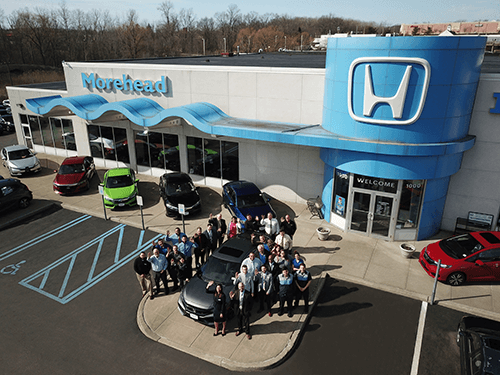
Morehead Honda

COMMUNITY STANDING

This outreach is important to maintain Morehead’s position in an aggressive market. The Honda dealership faces direct competition from nearby Nissan, Kia and Toyota dealerships. “We’re contending with some really good brands that are up and coming and who have brand new showrooms that we’re competing with,” Daya said. One of the dealership’s major strengths, however, is its position in the community. “The Morehead family name is really something that has been built to last for quite some time now,” she said. The dealership has been a familiar site to the Newburgh area for more than 70 years and is very visible because of its community outreach. It sponsors, among other things, charity golf outings, cruises, ethnic festivals, pet rescues and concerts. This reputation allows for better sales because the community is familiar with the dealership and has a certain amount of trust in the company. Daya wants to build on this trust with the customers she contacts.

“I love what I’m doing now and how my position has transitioned into because I can nurture customers more than ever before,” she said. “I really love making them feel comfortable and making sure they have a great time with us. I really try to take care of them. It’s near and dear to my heart because it’s something that I put myself into every day. Obviously, the results are there. If you take care of people, they’ll take care of you.”

The family atmosphere generated by the Moreheads is also key to this trust, not only in the community but on the Morehead Honda team, as well. “The Morehead family has been so great to me,” Daya said. “That’s why I love coming to work. When you love what you do, it’s going to show.”

While she is a department of one now, Daya said she receives tremendous support from the dealership’s team and envisions a time when her department will not only expand in future growth but in profits as well. “I’m just really proud of how far we’ve come over the years,” she said. “We have a good team in place, and I’m so excited for the years to come.”


What can Apollo help you with?

AutoSuccess Story: Huggins Honda

Continuing the Incredible Climb

Huggins Honda Continues Year-Over-Year Growth, Always Searching for New Ways to Serve Its Customers.

“People can be resistant to change, so you break that resistance down by embracing it, understanding it and putting focus on it. By embracing it, our team adapts to change pretty well.”
– David Elattrache, 2017

When we last spoke with David Elattrache, general manager of Huggins Honda in North Richland Hills, Texas, in February 2017, his dealership had just put up a banner year. The dealership — which serves Fort Worth, Dallas and the northeastern section of the state — had grown its new car sales 20 percent over the previous year and had put in place some new marketing initiatives to keep that momentum going.

We wanted to check back in with Elattrache’s dealership a year later to see if he and his team had been successful in that effort. The result?

“Somehow, we were able to do it again,” he said. Huggins not only posted another 20 percent YOY growth rate in new cars, but climbed up the national charts, as well. “We ended up being 55th in the nation in 2016, so we set a goal on being, maybe, 35th in 2017. We ended up being 25th.”

This increase has made the competition surrounding Huggins take notice. “We also had the highest percentage increase in our district as well, and our retention numbers went up in both sales and service,” Elattrache said. “Then, December was a high-water mark for us against one of our competitors, Toyota. We outsold every Toyota store in the metroplex individually. Everyone was really excited because we hadn’t achieved that yet.”

While marketing, setting goals and other sound business policies have been key to this continued and increased growth, Elattrache said there was one factor that shouldn’t be overlooked — fun. “I think that’s been the biggest common denominator of it all, is just that; we’ve all had a whole lot of fun trying to achieve goals,” he said. “Everybody was just super pumped and excited. Everyone is aware of the store’s successes, opportunities and the failures that we’ve learned from. We all take pride in it and it’s been a lot of fun.”

Team Building

The idea of building a team instead of a collection of employees is one that Elattrache is very careful to keep in mind and put into action. With a staff of almost 200 people, he doesn’t want his people to become faceless cogs in the machine; the Huggins staff is one that sees that success for one is success for all.

“I give the credit to managers we have in place,” Elattrache said. “We try to hire people who not only truly care about our staff but invest in them. We build a relationship with our staff. We spend so much time with them that what’s important to them becomes important to us. We recognize that we have certain goals here at the store and the only way to achieve them is by working together. I read an article not too long ago that said ‘leadership is a total sum of all the different departments,’ and I believe that’s a very true statement.” Elattrache said this also holds true for the Huggins family, who have supported him and his team through the evolution of the dealership. The dealership, started in 1983 by Gene Huggins who worked with sons Craig and Ron, has always focused on what’s best for its team and its customers.

Sometimes, though, management has to be careful with what they say. “We had a manager say he would shave his head if the team hit a certain goal. Guess what we did when we hit that goal? We brought a barber in and shaved him bald. Everyone got a big kick out of it because it showed that we were willing to put our head where our mouth is, so to speak. We had a lot of fun with that. We try to make a hard job a fun job.”

Competitive Landscape

It’s essential for everyone at the dealership to work together, because Huggins is in an extremely competitive market. “Our biggest competitors are Toyota, Ford and Nissan,” Elattrache said. With experts projecting that car sales might be slowing down in the coming months, Huggins wants to ensure that they make the most of every opportunity with customers they have, and Elattrache believes they have the brand to beat. “We have great products,” he said. “Honda has probably some of the sexiest sheet metal I’ve ever seen. They deliver us not only a great product, but they make it look beautiful. That’s helped us a lot, I think, in our quest to outdo our competitors.”

What also helps is the willingness of other area Honda dealerships to pull together. “I think all the Honda dealers know that we’re not competitors of one another,” Elattrache said. “We’re competitors of the other manufacturers. I think that helps, at least as far as relationships and trading vehicles, and to make sure we put as many people in Hondas as we can.”

Providing Opportunity to the Customer

One of the areas Huggins has focused on to maintain and increase marketshare is through the vehicle upgrade program in their service department. “A lot of the growth we’ve seen is due to our team, the support of the Huggins family, and our strategic partners, like Team Velocity,” Elattrache said. “They’ve partnered with us for our upgrade initiative, for example, and that’s been something that’s evolved over time. I can’t say enough about that group of people. They get in there, roll up their sleeves and get to work alongside us. Their success is our success, and vice versa. In December, we sold 80 new cars as a result of that initiative. Other initiatives have been in our quick service area, where we hope to again see double-digit growth. Opportunity begets opportunity, so it’s just been a great thing.”

Part of any new initiative is learning what works and what doesn’t. When things aren’t going as planned, some leaders feel the need to scrap it before any more time and money is lost. Others, however, look to see if they can learn from mistakes. “When we first started (our upgrade initiative), we fumbled and fumbled and fumbled, and we kept getting it wrong,” Elattrache said. “We weren’t getting the success, and we weren’t getting the return on our investment either. We knew it had to evolve. We now have two people in charge of the program, and we’ve trained our sales personnel and service drive to embrace it as well. Now it’s a win-win for not only us, but mainly for the customer. Our customers are looking at a new, beautiful Honda with more technology, and are able to take full advantage of it if they want to. We’re just giving them the opportunity to do so.”

Where some would have discarded the program, Elattrache and his team continued to work it until it started to shine. “The true change has been the integration of the two right individuals in our upgrade department,” he said, “combined with the integration of both our service and our sales teams to deliver a good customer experience.”

The benefits go further than just the one-time sale, as well. “Not every one of our customers utilizing our service lane bought their car from our dealership,” Elattrache said. “We were seeing cars that were sold elsewhere being serviced in our service department. We’re able to help those people that have never had a sales experience with us have one, and so that’s been a win-win, as well.”

In addition to selling from the service lane, Elattrache has tasked Team Velocity to conquest new customers from what many dealers would consider out of market. “A lot of dealerships will try to go outside of their assigned sales area to bring in additional sales,” he said. “We realized that there’s kind of a shift in what people are wanting to drive, though. They’re not as loyal to brands anymore, but more interested in the type of vehicle they want and the experience they get when they purchase that vehicle.”

This line of thinking led Elattrache and his team outside the box of conventional thinking. “What we set out doing is conquesting within our own assigned sales area with Team Velocity, and those numbers have been tremendous for us,” he said. “In 2017, we put a total concentration of staying within our ASA and through Team Velocity’s marketing programs, we were able to reach out to those people on a consistent basis to invite them into our new facility we built in July 2015 for a brand-new experience. Team Velocity has been huge for us. They’ve been a game changer in the largest sense of the word.”

Part of the appeal of Huggins marketing team is that they know what’s working and what could be improved. “Team Velocity is very transparent,” Elattrache said. “They only take credit for what they can show us through their software and our software combined. They make it easy for us. We can go in a 10-minute meeting and basically see everything that’s been accomplished in the month prior and the results. With the results overview, we can determine the direction we need to go in for the next month.”

Future efforts will include focusing on first-time Honda customers, increasing vehicle leasing rates and a few other items that Elattrache believes will increase service repair orders. “We want to take honoring the customer’s time to a whole new level and make it an easy process for them,” he said.

Customer-Focused Effort

One of the developments at Huggins in 2017 that Elattrache feels proud of is the increased customer service his dealership is providing. “We’ve increased our focus on the customer, the attitude of our staff and the atmosphere that a customer feels when he or she walks in our doors,” he said. “It’s everything. You know how you can walk into a certain store and not feel very comfortable? A customer will never feel that here. We’ve built a culture that is based on transparency and trust. Our culture is centered around building a relationship with each and every customer.”

Part of that focus is working to educate customers on not only what they need but what they may not know is available. “Educating customers can be hard, and it can be very expensive because it
won’t bring you that immediate return on investment. It’s important to do, though.”

Huggins has found that the solution to this issue is actually the solution to most issues at a dealership: getting the team involved in the process. “You educate the consumer through your people,” Elattrache said. “The more education you give them, the more you empower them. They then represent you by educating their customers, families, friends and the people they meet. When those 197 employees are on social media, they’re able to relay what they know and what our dealership has to offer. That’s a very good thing.”

Meeting the Future

While the demands of the modern automotive consumer have evolved — and continue to evolve — Elattrache knows that it’s his job and the job of his team to meet those needs. “We don’t think about challenges. We think about opportunities. A customer is never a problem; they’re our customer. The key is to be in touch or in sync with our customers, and realize they’re wanting more of a modern retail experience. Our customers want convenience, speed, efficiency and basically, all they’re asking us to do is to keep it simple and easy. That’s how we try to make our whole transaction, not only for our customer, but for our sales staff; simple and easy.”

It’s been a big year for Huggins Honda. What would 2018’s Elattrache tell his 2017 self? “I would tell myself, ‘Hey, you can achieve so much. It’s just a matter of putting together a great team and going the whole nine yards. You all can achieve so much. Believe in the abilities of your people, your organization, your manufacturer and your partners, and just enjoy the ride. Anything is possible. Go get it.'”

AutoSuccess Story: Rocky Mount Toyota

Out of the Red and into the Black

Rocky Mount Toyota turns its future around after new leadership and fresh ideas return the store to profitability.

At first glance, the odds seemed stacked against Brent Mattingly’s dealership as he took over as general manager last year:

  • The underperforming store had been losing money and severely lacking in vision and leadership
  • The surrounding area is made up of a small, lower-income market
  • A renovation was in the future, but that meant working out of old and temporary buildings for more than a year

Despite these challenges, Mattingly and his team at Rocky Mount Toyota, located in Rocky Mount, North Carolina, have not only stopped the financial bleeding but are on track to be in the black to the tune of seven figures by the end of the year. The store, previously known as Bobby Murray Toyota, was purchased in August 2016 and became the 13th store in the Hudson Auto Group. Mattingly, who had been working as a GM in Southern Indiana, was brought on board. He knew he had some work ahead of him, but he also saw the potential.

Taking Stock of the Situation

“When we purchased the store, it was basically like being a dealership brand in 1983,” Mattingly said.

“The dealership was out of touch with what the market demanded. In a little under a year and a half’s amount of time we’ve been able to move it to the modern way of doing business.”

There were three areas Mattingly and his team knew they had to focus on to successfully modernize the dealership: leadership, processes and training. The new management team believed that the difficulties the dealership faced came from a lack of vision from the top rather than problems with the staff. With a plan set in place, everyone was able to keep their jobs in the transition.

“Everybody had just been so used to not having any leadership — any accountability measures or processes,” Mattingly said. “And the previous owners didn’t invest in the people or the facilities. They didn’t give them the training. They didn’t give them the tools they needed to have for them to be able to succeed individually, along with having the team succeed. So, when we purchased the store, that was our first initiative — to give people the skill sets that they need to be able to do their job to the level that was required by today’s market.”

The first step toward profitability was getting everyone on the same page of running a successful dealership on a day-to-day basis. “The biggest change occurred when we went in and installed processes, and made people accountable for those processes,” Mattingly said. “When we first took over the store, there were 50 employees, and there were 50 different processes. Everybody just kind of did what they saw fit and what they felt best suited them. We came in and streamlined everything and put everybody on the same processes. Everybody knew what they were expected to do each day.”

The results? “From Day One, our staff instantly increased the volume and revenue of the store. Everybody’s made it a complete success.”

Mattingly also knew that investing in training his people would make a huge difference in both the store’s profitability and his team’s personal and professional development and enjoyment of their work. “We did a lot of in-house training,” he said. “Just a lot of daily, every-situation training — every deal, every service customer, everything. We did constant all-day-long training for months and months. And we got buy-in from our people once they saw that this was working and making their job not only easier but also making it more rewarding for them. That led to instant buy-in.”

One Message, One Goal

No matter how well the staff prepared, though, the dealership’s leaders knew that getting the word out to the surrounding market was crucial to building a successful business. Although the dealership was well known by customers in the area — at 30 years, it was one of the longest-running dealerships in the region — its marketing had lagged behind. Rocky Mount Toyota’s message needed to be refreshed and reimagined.

After searching for a marketing partner, Mattingly’s team chose Team Velocity to build their branding and advertising platform for the new era. “With Team Velocity, we’re doing our vehicle exchange program through them, along with direct mail, email blasts, social media marketing, search engine optimization, and other work to build a heavy digital presence,” Mattingly said. “It works well together because it’s such a consistent message over all the platforms. Once a customer’s seen the message digitally, they’re seeing it in their mailbox, they’re seeing it on signs at the dealership. Even the receptionist answers the phone, ‘Are you calling about the vehicle exchange program?’ It’s a consistent message through all points of contact.”

Not only has the marketing become more effective, but it’s allowed the leadership, sales and service staffs to concentrate on what they do best: serving their customers. “It’s really simplified the process, and it’s put everybody on the same page,” Mattingly said. “It’s a streamlined approach; instead of having all these vendors and all these different people doing their own thing, they’re doing everything for us, and we’re able to pull together with that consistent message, rather than changing the formula every month as some places do.”

And that marketing has to be effective if the dealership is going to survive and grow. Rocky Mount, located about 50 miles outside of Raleigh, North Carolina, is a small, lower-income area, where credit scores are often challenging to work with. “It’s a very tough market that a lot of people have given up on,” Mattingly said. “But it’s one that we’re growing in and should flourish in. We’ve had to be very aggressive. Southeast Toyota has some programs for loyalty and conquest customers, and we maximize every opportunity that comes in. We want to find a way to help every customer who comes in to buy a car. We analyze every customer and every situation individually.”

Service During Construction

In any modern dealership, the service department is essential for not only repairing and maintaining customer vehicles but for maintaining a future relationship with that customer as well. Rocky Mount Toyota is in the finishing stages of constructing a state-of-the-art facility, but that has led to its own set of challenges, especially for its service department.

“Service probably has one of the messiest situations in the dealership right now,” Mattingly said. The new facility is being built on the existing property, so things have had to be shifted around as space permits until construction is completed in February 2018. “Our service write-up department is currently in our showroom,” he said. “We have to shuttle the cars to a separate building to do service. We’ve been playing a shell game and moving stuff around consistently while construction goes on.”

What’s surprising? “We’re actually growing during this period of time,” Mattingly said. “We’ve been able to grow customer PROs, warranty ROs and complete all of our ROs, even as our competitors have really come after us through their own forms of marketing, trying to steal our customer base.”

One of the elements that Mattingly credits with keeping Rocky Mount’s service department afloat and thriving is Team Velocity’s marketing efforts. “They’ve helped us keep our customer base by constantly reaching out to a perfect target mix of customers within our community,” he said. “They’re going through conquest customers, they’re going through loyalty customers, they’re going through our marketing tendered customers. We’re able to bring them in, and if a customer hasn’t come in a while, they get a more aggressive offer than a customer who is routinely coming back to us.”

Rocky Mount Toyota uses Team Velocity Apollo Technology Platform® to manage integrated marketing campaigns for sales, service and equity mining. Apollo automatically generates and deploys campaigns across mail, email and digital advertising, offering consistent messaging and branding, and provides a Web-based dashboard to track results in real-time.


Once the customers are in, the processes that Mattingly’s team put in place come into effect to give each customer a complete service experience “We have a service manager T.O. every customer in the service department, presenting menus and presenting all their options,” he said. Add to this the vehicle exchange program put into place in the service department, and the dealership has maximized this valuable profit center.

New Facility, Fresh Vision

While servicing customers in a construction zone has its challenges, Mattingly knows it will all be worth it when it’s complete. “Moving into a state-of-the-art facility will simplify a lot of things,” he said. “We’ve been growing during construction, and we’ll have the newest, nicest facility in the community, so that should gain us more business, as well. We’re looking forward to the future, and we’re committed to serving our customers and maintaining and increasing our growth and our profitability.”


Learn more about Rocky Mount Toyota and the strategies outlined in this article:


AutoSuccess Cover Story: Brian Benstock (Paragon Direct)

The future can be a frightening place, especially for those not able — or willing — to adapt to changing realities and market conditions. While the auto sales industry has enjoyed several years of growth, change is on the horizon. Those dealerships locked into past models and old methods of thinking might not find that future to be a hospitable — or survivable — space.

Brian Benstock, vice president and general manager of Paragon Honda and Paragon Acura of New York City, has spent time and effort trying to determine what that future has to offer, and one word sums up his findings: disruption.

The ways of the past

“The current dealer model is not a dying breed,” Benstock said. “It’s dead. It’s absolutely dead.”

The reason for his startling prediction is due in part to changing customer expectations of not only automotive shopping but the very act of shopping itself. Benstock believes that the convenience, growing acceptance, and ultimate expectation of online transactions — along with the transparency those transactions demand — run counter to the classic dealership model.

“The most successful businesses are the ones that best meet the needs of the customer,” Benstock said. “For years, the dealers have relied on antiquated business models — the franchised dealer agreements — to protect themselves. The second the customers are given an opportunity to go away from the standard business model of automobile dealers, they will. More and more, we’re seeing that they’re being given many different options by some of the largest retailers in the world.”

Several of the companies responsible for this disruption of the automotive industry are not even in automotive sales. “We’ve got companies like Amazon and Apple that are approaching a trillion dollars in valuation,” Benstock said. “They have incredible resources to take over and change any industry that they so choose.”

Current realities and potential opportunities

The reality of Benstock’s Paragon dealerships is one of the reasons he’s made it a point to anticipate future market conditions. Located in Queens, just outside of Manhattan, the Paragon dealerships are the No. 1 new and used car dealerships in the country. Because of their location, however, the dealerships have always had to think differently about the way they do business. “Real estate is at a premium,” he said. “Compared to some other dealers in other markets that have acres of land, we have a patchwork of properties. Customer parking and customer display can be one of the challenges, but that also leads to some great opportunities.”

One of those opportunities is the ability to continually re-think how they do business. “Does it make sense anymore to bring the customers to the dealership?” Benstock asked. One of the answers to that question was the creation of Paragon Direct, a new online platform where customers can do everything from arrange a test drive to purchase a vehicle. Benstock refers to this method of doing business as a “frictionless consumer experience,” which is something consumers are increasingly demanding. “We’re in the New York market competing against some of the best Honda and Acura dealers in the country, and we’ve proven we can hold our own. We’ve taken a look at some of the disruptors and business models that are coming in, though, and those are causing customers to take a different look at things.”

To meet this challenge head-on and serve consumers how they want to be served, Benstock and his team have taken a step back to see what sales methods would best meet their needs. “The customers basically want three things,” he said. “They want us to know them better, serve them faster, and ‘wow’ them everywhere. This is not special anymore. This is an expectation of today’s consumer.”

Marketing to today’s drivers

Part of meeting those needs is presenting a marketing message that connects the dealership with customers in a meaningful way. To do this, Paragon Honda and Paragon Acura have partnered with Team Velocity to present their marketing and direct mail, including using Apollo, a data-mining solution, to provide the right message to the right contact at the right time.

“[In addition] we’ve been utilizing a vehicle exchange program for several years and targeting customers with the highest likelihood of doing business with us now and in the future,” Benstock said. “That’s worked out for us.”

The availability of consumer data has never been higher, and that ability gives dealerships, like Paragon, tools to connect with consumers directly. “We’re taking a closer look at our CRM and data that’s available from our customers and making sure that, when we speak to our customers, we’re speaking from the knowledge that we should and do have about that customer,” Benstock said.

From an industry-wide perspective, Benstock knows this data has not been utilized to the same full potential other businesses have been successful with. “Why is it that many other retailers in other industries seem to be able to better target their customers than an automobile dealer when we’ve got incredible data on our customers? We know their buying patterns. We know their product selections and desire. We know their budgeting information. I don’t think we do a great job as an industry in effectively communicating with our customer in a personalized manner.”

Benstock believes that the auto industry has lagged behind this curve due to one glaring reason – if a consumer wanted to buy a new car, they had to go to a franchised car dealership. As a result, the auto sales industry has been slow to react to changes. That luxury, Benstock believes, is quickly coming to an end as the consumer’s very relationship to vehicles is evolving. “Take Uber, for example,” he said. “They are offering fractional ownership opportunities or fractional ride-share opportunities. When I say fractional, I don’t mean monthly. I can pay per ride. I can have the car I want, the size I need, delivered when I want, where I want. Many customers are finding this more efficient than owning their own automobile. Then add into that, the autonomous car that is going to be a part of our future. The driver is the biggest expense of Uber. So, Uber will then become even more of value as there will no longer be a need for a driver. That’s just one disruption.”

“Then you’ve got Elon Musk and the Tesla group, going outside of the traditional franchised dealer system saying, ‘We think we can do it better,’” Benstock said. “They’re offering different products in a different manner. It’s interesting to see the initial success they’re having. They’re doing quite well in the high-end luxury market and seem to have taken over a pretty good amount of the market share.”

Consumer behavior has also disrupted the marketing landscape. “We’re certainly looking at how easy is it for our customers to do business with us online,” Benstock said. “The Internet, for most of us, has gone from informational 10 or 15 years ago to transactional today. Fully transactional. I think auto retailers have not been quick to embrace that. More and more, we’re realizing as a group that we need to do a better job there.

New customers, new sales methods

This innovative insight into the sales process was the catalyst for Paragon Direct. “We’ve built it for speed,” Benstock said. “Not that our customers would need to conduct a transaction in under a minute, but pretty much they can get to a negotiated price by themselves in under a minute. If they have a trade involved, or there’s financing involved, it will take slightly longer, but customers can navigate on their cell phone or however they access the Internet [with ease].”

Before this new transaction model can be fully adopted, however, some psychological barriers need to be overcome — both on the customer’s and the dealership’s side. “From the consumer standpoint, there’s a natural distrust of automobile dealers,” Benstock said. “So, when you’re offering to do this transaction completely online, and you’re offering transparency, it’s not something that they’re used to getting from dealers. Also, they’re not 100 percent comfortable doing such a transaction online yet. They will be, but initially, we are finding many of our customers are getting 70 or 80 percent through and then electing to conclude the transaction in the dealership. The good thing is they save a lot of time by doing most of the transaction online.”

From the dealership’s side, while transparency might be a scary prospect, it’s one Benstock believes must be implemented. “Our philosophy is that transparency can and should improve revenue by making it easier for customers to have access to the information they want online,” he said. “Imagine if you wanted to buy an iPhone online and they told you, ‘Come on in, and we’ll give you the price.’ It’s preposterous, and yet in dealerships around the country, that’s exactly what happens.”

Holistic dealerships

In addition to changing the way dealerships interact with their customers, Benstock believes the way internal departments interact with each other needs to change as well. “Each department used to have to stand on its own independently,” he said. “Now, we need an interdependence of the departments. We have to look holistically at the profit centers at the dealership. For instance, you get the new car manager who doesn’t want to take a short deal when there’s a trade in. By not taking that deal, however, they’ve deprived the used car manager of a car and deprived the service department of a service RO. They didn’t look at that deal holistically. What gives any one manager the right to cut out those other departments? The managers of today need to have an excellent understanding of the complete business.”

The future

“I think the current state of customer satisfaction with the buying process makes our market ripe for disruption,” Benstock said. In addition, he believes that even the model of automobile ownership will soon change. “I think dealerships are going to see consumers paying a monthly payment and being able to drive [or] shift out of cars without long-term commitments,” he said, “very much like what we’re doing with cell phones today. Let’s call it ‘flexible drive ownership.’ It will be the ability to pay a fixed monthly payment and drive an SUV when you need an SUV, to drive a coupe when you need a coupe and a sports car when you want to drive a sports car.”

Benstock sees these changes as revolutionary for the auto sales business but believes dealers and GMs who consistently react instead of proactively meet this future will suffer. “I think you’re going to continue to see more decompression,” he said. “I think you’re going to see a reduction in the number of dealerships and a reduction in the number of people employed at dealerships. I think dealerships are going to be distributions points, and dealerships are going to have to be moving at the speed of the customer wherever the customer wants to be.”

Where some see a crisis, Benstock considers an opportunity for those willing to embrace it. “Change is going to come whether we like it or not,” he said. “The saying is ‘change or be changed.’ What our dads did, or our mentors did, our predecessors did, some of those basic business philosophies certainly hold true. Others need to be completely revisited. We have to adapt. We have to adapt and be very, very flexible in our beliefs.”

Success Story: Phillips Toyota

New Marketing Efforts at Phillips Toyota Drive Record-Breaking New Car Sales.

AutoSuccess October 2017 Success Story: Phillips ToyotaWhen Tony Viero took over as the general manager of Phillips Toyota in Leesburg, Florida earlier this year, he knew he had work to do. The dealership was underperforming, and its client base, made up primarily of an older demographic, didn’t respond well to modern marketing and sales practices.

The dealership, owned by Larry Phillips, is part of a group that includes a Buick/GMC store in Leesburg, as well as a Chrysler store in nearby Ocala, Florida. The family-owned and family-oriented stores enjoy wonderful reputations in the community. The Toyota store, however, wasn’t performing as well as Phillips knew it could. To move the needle, Viero had to redefine the very idea of what an auto dealership is for a senior generation and, to do that, he knew he had to make some changes both to the dealership’s staff and its message.

Those changes are now paying off. In July and August 2017, the store has set back-to-back all-time record months in its history in new car sales.

The thing Viero is proudest of, however, is the team he’s put together — a team based on honesty and integrity. “One of our customers, an 80-year-old woman, thought she had lost her $20,000 engagement ring on a trip,” Viero said. “She had no idea she had lost the ring in the car she had just traded in, until one of our detailers found it. We had her salesperson drive out to her and, after she described it to him, gave her back her ring. That’s the level of integrity expected out of every person in our building. That’s the team we’ve built here.”

The Area and It’s People

To understand the challenges Viero faced when he took over at Phillips, it’s necessary to look at its client base and its competition. “The area — The Villages and Leesburg — is a retirement community for the most part,” Viero said. “We cater to a very senior community, and that brings its own challenges and its own opportunities.”

Another challenge that Phillips faces is from other dealerships in the area. “We compete with many stores in the Metro Orlando area,” Viero said. “Some of these dealerships spend millions of dollars in television advertising alone, so it’s a very challenging market.” In addition to competing Toyota dealerships, other franchises are also vying for their share in Phillips’ market.

Starting Over

Seeing a change was needed, Larry Phillips brought Viero in as the general manager in January 2017, and gave him a free hand to make the changes he felt necessary. “Larry is not a micromanager,” Viero said. “He believes in his managers and allows them to lead.”

Viero came into the job with automotive sales and marketing training from Northwood University, along with experience he’d gained from several dealerships and his time spent as a district manager for Southeast Toyota. After examining the challenges facing the store, Viero quickly decided the dealership needed a nearly complete makeover — and that makeover started with the staff.


Phillips Toyota


“We’ve redeveloped our entire dealership,” Viero said. “We’ve changed almost all of our managers. We kept one manager who’d always gotten the job done but hadn’t been allowed the leeway to make the changes necessary to grow, and we kept our finance department director, who has always been a rock. The rest of the management team, however, is different. There are a lot of really exceptional people now working here who get the job done every day.”

Before he arrived, the store had been on Toyota’s program for underperforming dealerships for more than two years. Viero said his store will be off that list by the end of the year. “Our people are all very focused on setting records and being at the top of the charts,” he said. “We’re working on building that. The mentality here is so much different than before. We’re a hard-charging store moving forward and trying to take everything we can get.”

Phillips Toyota also expanded its sales staff with an eye towards growth. “When I got here, there were only 16 salespeople; now we have 25.” While Viero’s team made a lot of new hires, those new employees were still held to a high accountability. “We went through some bumps in the road. We had hired some managers who are no longer here because they just weren’t the right fit culturally,” Viero said. “Now we have a team. My father and I once had a conversation about what motivates people, and I’ve found hiring people who you like to do business with and be around is so much easier. You want people with the same mentality you have. We now have that.”

Building a team may take more effort in the hiring and training stages, but Phillips Toyota is now seeing the benefits. “What these guys are able to accomplish in such a short window, with all the changes we’ve made, has been remarkable,” Viero said. “And it has to do with the level of integrity expected out of every person in the building — from the salespeople to the detailers. They understand there’s a certain respect level and they all know I won’t accept lying in a store. You’re not going to lie to me, you’re not going to lie to the customer — you’re not going to lie to anybody. I’ve terminated people on the spot. Integrity is a big piece of what I want in a car dealership, and that, unfortunately, is highly uncommon.”

A Different Kind of Marketing

Because the retired and elderly demographic makes up so much of Phillips Toyota’s client base, the store found that what works for other dealerships when it comes to marketing wouldn’t necessarily work for them.

Phillips Toyota montage

Phillips Toyota uses Team Velocity Marketing’s Apollo Technology Platform® to manage integrated marketing campaigns for sales, service and equity mining. Apollo automatically generates and deploys campaigns across mail, email and digital advertising, offering consistent messaging and branding, and provides a web-based dashboard to track results in real-time.

“We use a multi-point strategy,” Viero said, “since we have to hit a lot of different facets with our marketing. Because of the age of our customers, for instance, we still run newspaper ads. So, we don’t just have one approach; we hit it on several different areas.”

One of the first things Viero did after coming to Phillips Toyota was to search for a marketing partner who could help him effectively reach his clientele — a group who wouldn’t necessarily react to ads reaching other, younger demographics. After seeing what various companies had to offer, Viero chose Team Velocity.

“The biggest element in selecting Team Velocity is trusting the people I do business with,” Viero said. “I know they’ve got my best interests at heart because I have ridden them very, very hard on the things I expect. They’ve proven to me they will do what’s right for my business instead of focusing on what they want to do. That willingness to put the needs of the client first can be difficult to find.”


Phillips Toyota saw an 11% increase in new vehicle sales

In the months Team Velocity has been on the job, providing a mix of traditional and digital advertising where it makes the greatest impact, Viero has liked what he’s seen. “I was the district manager for Southeast Toyota for two different districts, and because of that background, I might have a higher digital acumen than most GMs,” he said. “I’m pretty demanding because I’m always checking and asking questions. They’ve done a great job of answering my questions and explaining their actions.”

Putting the Phone in the Right Hands

Another element Viero wanted to see implemented at Phillips Toyota was an effective BDC department — something the dealership didn’t have when he came aboard. “There was no BDC department when I took over,” Viero said, “and I knew we needed one. I’m a firm believer that most salespeople are terrible on the phones. They are built for the ‘here and now,’ and the majority lack phone skills. I needed a system put in place where my customers were getting handled effectively and we were getting a constant flow of appointments.”

Viero went one step further, and also put a service BDC in place along with the sales BDC. “We covered both fronts,” he said. “One of the best things we’ve done is take the phone calls off the service managers. Since the service BDC now handles that, they don’t have to take the time to answer phones and field status calls. It makes no sense to tie them up on the phones when they could be dealing with the customers already in their department. The BDC has been a great help our service department.”

Results

Between the enhanced marketing strategies and the efforts of Viero’s team, the results have been encouraging, to say the least.

“The store is on a very high growth rate,” he said. “In July (2017), we sold 217 new cars, up from 150 the same month the year before. In August, we sold 239 new cars. These are huge growth leaps.”

The dealership’s digital results have been impressive, as well. In February 2017, when Team Velocity first came on board, the store had an 8 percent conversion rate, with 175 total conversions. In August, those numbers have jumped to 15.28 percent, with 609 total conversions.

“Larry Phillips has always had a good reputation in market — he’s done business here for more than 30 years,” Viero said. “We’ve tried to take that and just improve upon it. He has given us a lot of trust. We’ve been making investments in the future of our store, and built a foundation to become more profitable, both for now and into the future. He’s trusted us all the way. It’s an awesome experience to see these guys start to reap the rewards of the hard work they’ve put in. Our goal is to make the Toyota store the beacon of his group.”

Success Story: Jones Honda

 Jones Honda blows past new and used averages in their market. Sales up 22% YOY with increased market presence.

Success Story: Jones HondaJones Honda, part of the Jones Family of Dealerships in Lancaster, Pennsylvania, has a great reputation for retaining customers and providing outstanding sales and service experiences. What the dealership lacked, however, were the tools and marketing strategies needed to get those customer onto the lot in the first place.

“Once customers come and see our facility and meet our people, we have a high conversion rate,” said Kris Jones, General Manager of Jones Honda. “Typically, if they’re coming, we’ll close them. Just this past weekend, we had a customer from Maryland who came in because they love our store. They’ve bought three cars from us over the last 10 years. They literally passed two major Honda stores to get here. We have a loyal customer base, even by Honda’s standards, and they measure everything.”

With a loyal active customer base and excellent retention, the question became; “How do we grow and get new customers walking through our doors who have never heard of Jones Honda?” With all economic indicators pointing towards a slowing market, this was a question Jones knew he needed to answer.

HONDA PIONEERS

One of the oldest Honda dealerships in the country, Jones Honda truly knows their customers and what their customers want. “We started off in 1960 as a standalone Pontiac dealer,” Jones said. “We were a Pontiac dealer until 1971. My grandfather, Jim Jones, had an opportunity to expand and add a new franchise, and the two that were available were Subaru and Honda.”

Deciding which franchise to pursue was a major decision, but Jim Jones found his answer from an unlikely source: dirt bikes. “My father, Steve Jones, always had Honda dirt bikes, and they didn’t require any maintenance,” Jones said. “You just rode them into the ground and they always started and ran well. My grandfather said, ‘Geez. If they build a car half as well as they do a motorcycle, we’re going to be in good shape with Honda.’ That’s what pushed my grandfather to select the Honda franchise over Subaru.”

In hindsight, the decision was the right one for the company. At the time, however, the future was cloudy when the products weren’t meeting the dealership’s immediate expectations. “If you remember, in ‘71, Honda’s quality was not anywhere near where it is today, so there was a bit of a struggle for a few years,” Jones said. “My grandfather believed in the product, though, and Honda quickly started producing great, reliable vehicles, and it’s been a wonderful franchise to have.”

From there, the dealership expanded, opening a GMC franchise in 1984, Acura in 1990 and Buick in 1999.

TOOLS AND TRAINING

Lancaster County isn’t a large metropolitan area, but there is still stiff competition when it comes to where customers decide to buy a car. Besides the many other franchises around Jones Honda, there are three other large Honda stores within a 40-minute drive, and still more competition in nearby Maryland and Delaware. To hold their own against their rivals, Jones Honda has recently remodeled its store into a state-of-the-art facility. Jones knows, however, that the true value of a dealership is with its staff. Because of this, the company focuses on training and providing a culture that supports staff longevity to enhance customer service and satisfaction.

Part of a winning customer service strategy is treating customers as people, and not simply as sales opportunities. “We’re not a super pushy store,” Jones said. “We’re not going to send five closers out there to try to close the deal today. A lot of stores have that, ‘You’ve got to buy it now’ kind of mentality. We talk to the consumer, and we get their agenda. We see what they’re looking to accomplish today, and then we tailor our process around that. It works well for us. Do we want to close a car deal? Of course. We’ll push — but only so far. People appreciate that and we have a lot of customers who come from all over to buy a car from us.”

That philosophy is also followed in the dealership’s online and follow-up processes. “Each store in our group has its own Internet team that responds to leads,” Jones said. “Our method isn’t to shoot somebody the best price and hope they come in. It’s a consistent follow-up program that gives the customers what they’re looking for.”

Training is also a key factor in Jones Honda’s processes. The dealership has contracted with David Lewis and Associates to provide new hires in their group with a five-day sales process training. “It takes our new employees from start to finish, so it starts on a Monday and by Friday, they’re done,” Jones said. “Saturday, they can come in and take a prospect through the processes up until the negotiation part. In the first week, they don’t spend lot of time going over our negotiation strategy only because each store does it a little different. Once they get through the initial training, there are various courses covering closing, objection handling and more. It’s nice because the training facility is only an hour away for us.” Advanced classes and refresher courses are also provided for experienced staff members to keep the sales team sharp and motivated.

MAKING MARKETING MATTER

While his store had great people and processes in place, Jones wasn’t liking what he was seeing from a marketing perspective. To get to the next level, he realized he needed to make some changes — a step Jones Honda didn’t take lightly. “We were with our last advertising company for around 15 years, and were with the one before that for about 20 years,” Jones said. “We’re not typically a ‘let’s try the latest, greatest thing and shoot from the hip’ kind of dealership.”

Change, however, was necessary. “We had hit a wall with our last agency,” Jones said. “They were a national firm located states away, and we would see them once a year, or maybe twice, if we were lucky. There was a big disconnect between what we were trying to accomplish and what they were trying to accomplish. We were never on the same page.”

Jones knew he wanted a marketing company much more responsive to his dealership’s needs, a company that his dealership could stick with for the long term who truly understood the car business. After searching for a company that would meet his needs, Jones and his team selected Team Velocity Marketing as the right agency for the job. “We were looking for a long-term solution that could move the needle,” he said. “We got away from our last ad company and went 100 percent with Team Velocity. They handle every aspect of our marketing and advertising. From SEO and SEM, to direct mail and equity mining with email. They even produce all our traditional TV and radio spots — everything. And we’ve seen a tremendous uptick. It’s been worth the investment.

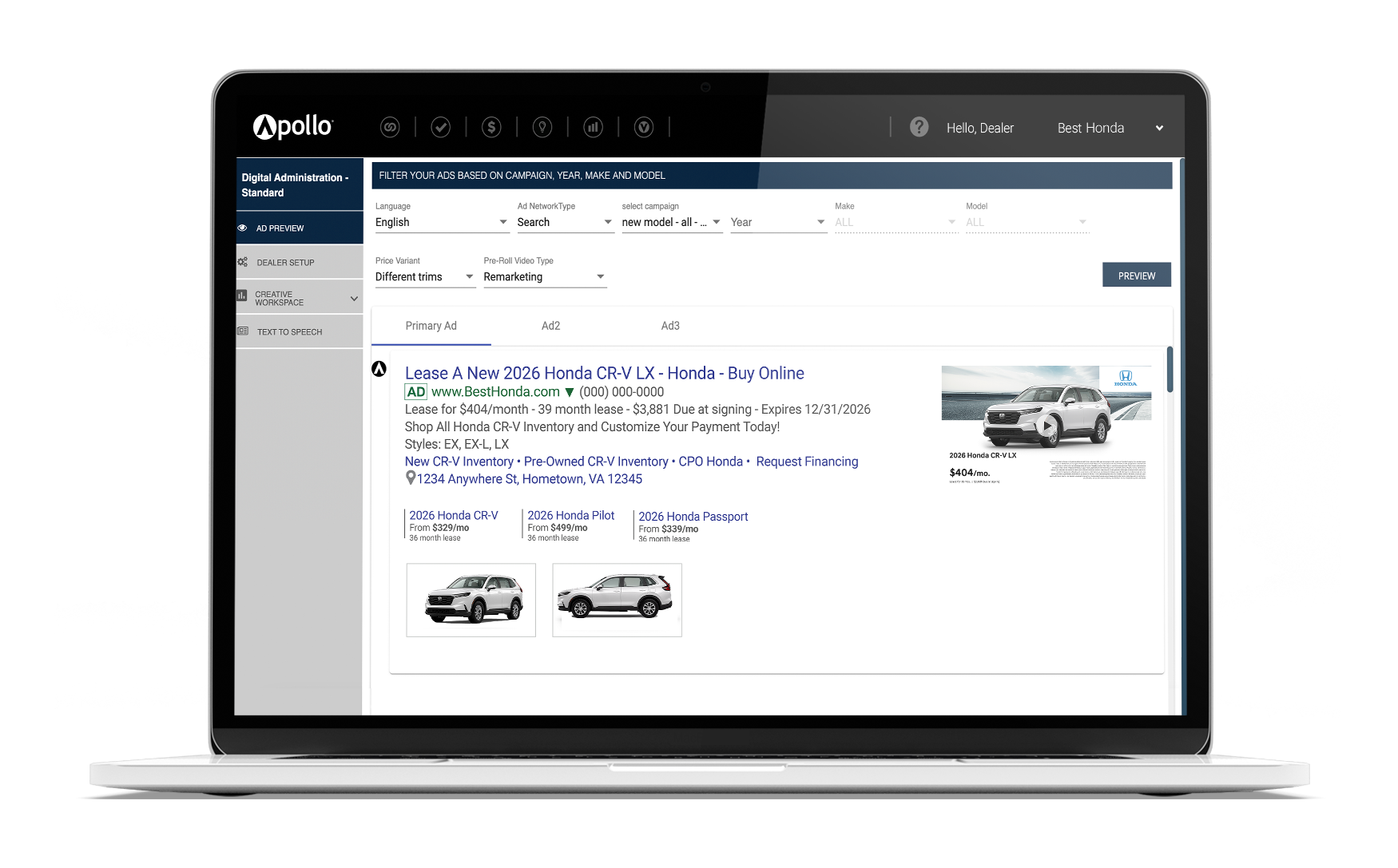
Jones Honda of Lancaster County uses Team Velocity Marketing’s Apollo Technology Planform® to manage integrated marketing campaigns

Jones Honda of Lancaster County uses Team Velocity Marketing’s Apollo Technology Planform® to manage integrated marketing campaigns for sales, service and equity mining. Apollo automatically generates and deploys campaigns across mail, email and digital advertising, offering consistent messaging and branding, and provides a web-based dashboard to track results in real-time.

Because they now have monthly meetings and weekly reports, Jones Honda can adjust much quicker to market forces and consumer behavior. “With Team Velocity Marketing, we know what’s working and what’s not working. If we see that a mail piece or email blast is killing it, we can tweak that for the next month and run it again. If something is underperforming, we can take another look and see if it can be made better or if we need to try something else. It’s a much more rapid process, and they’re much quicker to react and move forward.”

REALIZING RESULTS

A major benefit of having a single marketing agency dedicated to the store is the ability to execute a centralized, all-encompassing marketing plan from start to finish. Why? Because it helps communication within the store, giving customers a better experience. “Before, with our previous advertising company, we would advertise, say, a Civic or Accord lease special,” Jones said. “Customers would come in asking about that special and nobody here — management or sales staff — knew what it was. The agency just made up an offer and never got our team on the same page”
 

infographic


Jones knew that had to change. “The way it works now, with Team Velocity, is that everybody knows what our message is,” Jones said. “Sales, Service, F&I — the whole store knows what we’re trying to accomplish. Now, when an ad brings a customer in, we know what the ad offered, what the payments were, and we can jump right into it with them. It’s that kind of across-the-board communication between all our departments that’s made a huge difference.”
Jones said his service department has seen the greatest results from the new strategies. “Obviously, sales has been doing well, but our service department has grown a ton with Team Velocity’s mail pieces,” he said. “We have a three-tiered approach. We have our active customers, our lost customers and our conquests. Team Velocity has a unique way to go after each of those groups and the results are incredible.”

The new marketing company also helped Jones Honda learn about their market — and turned up some surprising facts. “We have more than 22,000 thousand Honda customers who are in our direct market,” Jones said. “We had no idea that number was so high. I would’ve guessed it to be half that.”

Once the market was better defined, marketing strategies were put into place to take advantage of the information. “Team Velocity’s approach is to send out highly personalized mail pieces to bring those customers in,” Jones said. “We’re seeing great success with these customers who have never been to our store. We’ve also been having a lot of success with customers who live in our market who bought from another dealer — we’ve been able to bring them in and get them to use our service department.”

The increase in visibility and staff coordination has directly increased Jones Honda’s sales figures and the dealership’s bottom line.

“Year over year, from 2016 to 2017, we’re up 22.5 percent in sales, and 115 percent in certified pre-owned,” Jones said. “To give you some perspective, in our district, Honda is up only 12 percent in new car sales and 17 percent in certified pre-owned for that same period. Team Velocity Marketing’s program is a winner and has had a huge impact on our overall growth.”

Success Story: Right Toyota

Success Story: Nielsen Automotive Group

Sales up 24% in May

Finding Success in a Changing Digital Landscape

In 1980, Bill Snouffer started on the sales floor of Dover Chrysler Plymouth in Rockaway, New Jersey. Little did he know that 37 years later, that dealership would evolve to become part of one of the most profitable dealer groups in the country. The dealership is now part of Nielsen Automotive Group where Snouffer serves as General Manager Located in Northern New Jersey, the group includes five stores; Franklin Sussex Auto Mall, Dover Dodge Chrysler Jeep, Franklin Sussex Hyundai Genesis, Nielsen Chevrolet and Nielsen Dodge Chrysler Jeep Ram.

Success Story: Bill Page Honda

Sales up 9% in a Flat Market

Sometimes the success — or very survival — of a company can hinge on one pivitol decision.

Bill Page Honda faced a pivitol decision such as this when the dealership, then a Pontiac franchise, decided to start selling Hondas in 1971. “At one point, Honda came in and said, ‘You’re going to have to make a decision: Honda or Pontiac’,” said Brian Kanyan, partner and CFO of the dealership. “Thank goodness Mr. Page made the right decision. Not only was it the right business decision, it was a fantastic life decision.”

Located in Falls Church, Virginia, William H. Page founded Bill Page Honda in 1950. In an area once considered “farm country”, the dealership faced some initial struggles getting customers in the door. “They had to work really hard to get people to come out to this area,” Kanyan said. “It took a great competitive spirit to get shoppers out into the country.”

That rural country landscape has changed around Bill Page Honda over the years. Falls Church is now considered part of the Washington D.C. Metro area and is filled with people from different countries and cultures — all with diverse needs. In an effort to grow and adapt to the area’s changing demographics, as well as the evolving automotive marketing landscape, the dealership needed to modernize. In 2014, Bill Page Honda demolished its original 1950’s building and constructed an all new state-of-the-art facility, allowing them to meet new challenges and take advantage of greater opportunities.

Success Story: Sims Honda

Sales up 25% YTD!

Cultivating a Team Environment and Empowering Salespeople with Targeted Marketing Tools

Sims Honda, located in Burlington, Washington, is on a roll. Sales are up 25 percent year-to-date, profits are up and the dealership commands a whopping 73 percent share of the local Honda market. “We’re just up and up and up, and it seems to keep going that way,” said Bobby Maynard, General Manager of the Honda dealership.

Success Story: Audi Coral Springs & Audi Ft. Lauderdale

Sales Up 14%

Discover How Audi Coral Springs and Audi Ft Lauderdale Did It

The Qvale Automotive Group is one of the major players in the automotive industry, and one of the reasons for their success has been steady, measured growth. Already having a large presence in California, the group expanded to Florida in 2010 and opened Audi Coral Springs. The company selected Glenn Grosso, who worked his way up from sales in the 1980s into the General Manager position, to lead that store. Thanks to his experience in executive roles, Audi Coral Springs has become one of the largest Audi dealerships in the United States in terms of new car volume, with close to 1,700 sales in 2016, placing them 14th in the nation.

Success Story: Richfield Bloomington Honda

Sales Up 40%

Gaining Traction as a Powerhouse in the Twin Cities

By creating a customer service-centric culture, driving sales out of the service lane and sending the right message to their customers the correct way, the leadership team of Richfield Bloomington Honda has embraced the fierce competition in Minnesota and gained traction as the powerhouse in the Twin Cities.

First Team Chevy Becomes No. 1 in 2016

Located in Hampton, Virginia, Hampton Chevrolet is one of twelve stores in the First Team Auto Group. On paper, the dealership might have a corporate structure, but once you go beyond the gorgeous showroom and 11 acres it sits on, you immediately feel the family-owned mentality that puts a customer automatically at ease.

Cover Story: Huggins Honda Climbing the Ranks

When David El Attrache stepped in as the General Manager of Huggins Honda in 2009, he knew that some changes would be inevitable to keep the dealership competitive for its future. After all, technology changes, facilities change and customers need change. One thing he wouldn’t have to change, however, and something he would come to rely on was the dealership’s team.

A Vision of Excellence

Through a vision of commitment to their team, a strategic marketing plan and a deep focus on data, Lithia Hyundai of Reno unveiled an innovative plan to profitability.

Happiness Breeds Success

A positive team and smart marketing will keep your customers happy (and coming back). Learn how the leadership and team at Rallye Acura and Rallye Motors uses strategic marketing and positive thinking to continually increase market share and ultimately maintain happy customers.